ICML Certifications – A Guide to International Qualifications in Maintenance
ICML certifications are among the most widely recognized standards validating the competencies of professionals involved in machinery lubrication, oil analysis, and machinery reliability. Learn what each certification covers and the skills it verifies.
What Are ICML Certifications?
Modern industry places increasing emphasis on machine reliability, maintenance cost optimization, and extending the service life of critical equipment. One of the key elements of a successful reliability strategy is effective machinery lubrication management.
ICML (International Council for Machinery Lubrication) certifications are internationally recognized qualifications that validate the knowledge and practical competencies of professionals involved in machinery lubrication, oil analysis, condition monitoring, and lubrication program management.
ICML certification is a well-established industry standard and is widely recognized across sectors such as:
power generation,
heavy industry,
steel and metallurgical industries,
chemical and refining industries,
the offshore sector,
manufacturing,
maintenance and reliability.
Holding an ICML certification demonstrates that an individual possesses competencies aligned with international standards and is capable of implementing best practices in lubrication management.
Why Is ICML Certification Important?
Machinery lubrication is one of the most underestimated aspects of maintenance and reliability. Industrial experience shows that a significant proportion of mechanical equipment failures are related to the improper selection, storage, application, or monitoring of lubricants.
A professionally managed lubrication program helps to:
reduce unplanned downtime,
increase equipment reliability,
extend the service life of components,
reduce lubricant and oil consumption,
improve workplace safety,
make maintenance decisions based on condition monitoring and diagnostic data.
ICML-certified professionals possess the knowledge and expertise required to develop and implement lubrication programs in accordance with global industry best practices.
What Is ICML?
International Council for Machinery Lubrication
International Council for Machinery Lubrication (ICML) is an independent, international organization dedicated to standardizing knowledge and professional competencies in the fields of machinery lubrication, oil analysis, and machinery reliability.
The organization was established in 2001 in response to the growing need for standardized qualification requirements for professionals responsible for machinery lubrication. As reliability-centered maintenance (RCM) strategies became increasingly important across industry, the need emerged for a global certification system that could validate the competencies of specialists responsible for lubrication management.
ICML develops independent certification programs based on comprehensive Bodies of Knowledge (BoKs), which define the knowledge requirements for individual disciplines and certification levels. ICML certifications validate practical expertise in machinery lubrication, contamination control, oil analysis, and lubrication program management.
ICML certifications are recognized worldwide and are held by maintenance professionals, reliability engineers, oil analysis specialists, and experts responsible for optimizing the performance and reliability of industrial equipment.
Why Were ICML Certifications Created?
Effective lubrication management has a direct impact on machine reliability, operational safety, and maintenance costs. For many years, knowledge of machinery lubrication was primarily passed down within individual organizations, without a standardized system for assessing the competencies of lubrication professionals.
ICML was established to create an independent, internationally recognized standard defining the qualifications required for professionals involved in lubrication management. The organization developed a certification system based on clearly defined Bodies of Knowledge, covering both the fundamentals of machinery lubrication and advanced topics such as oil analysis, condition monitoring, and reliability management.
ICML certifications enable companies to assess the competencies of their personnel more effectively, while allowing professionals to demonstrate their expertise against consistent, internationally recognized standards.
What ICML Certifications Can You Obtain?
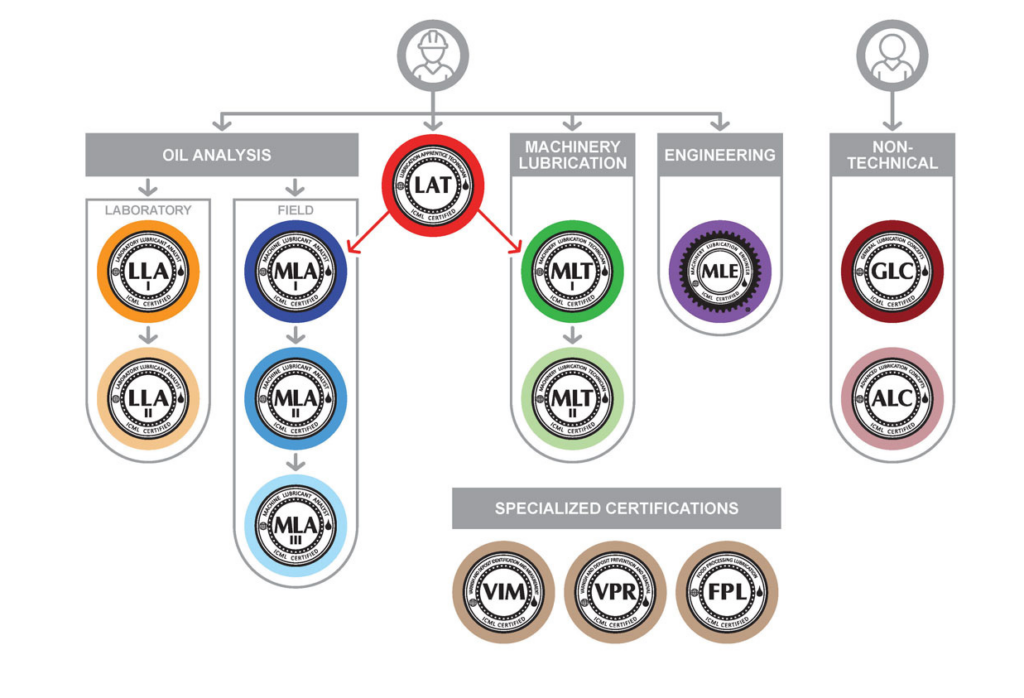
ICML offers several certification pathways designed for different professional groups – from individuals beginning their work with machinery lubrication, through maintenance technicians, to experts responsible for reliability strategies and diagnostic laboratories. Certifications can be divided into five main groups:
1. Fundamental certifications – foundations of lubrication management
2. Technical certifications – operation and maintenance of lubrication programs
3. Diagnostic certifications – oil analysis and machinery condition monitoring
4. Laboratory certifications – lubricant analysis and testing
5. Expert and management certifications – designing reliability strategies
1. Fundamental Certifications – Foundations of Lubrication Management
For individuals beginning their work in lubrication management or looking to validate their basic understanding of proper machinery lubrication principles. (Foundation Level)
Certification: LAT – Lubrication Apprentice Technician.
2. Technical Certifications – Operation and Maintenance of Lubrication Programs
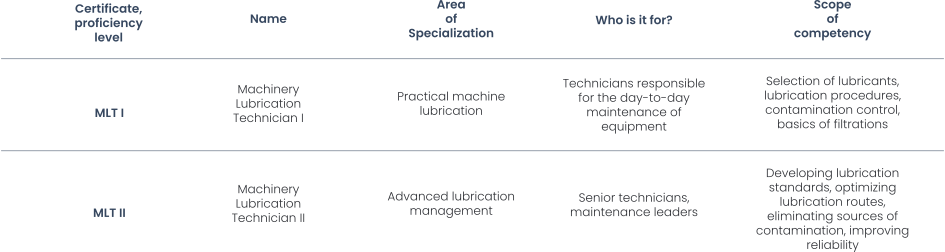
For technicians, mechanics, and maintenance professionals responsible for performing and supervising lubrication activities. (Machinery Lubrication Technician – MLT)
Certifications:
MLT I – Machinery Lubrication Technician Level I
MLT II – Machinery Lubrication Technician Level II
3. Diagnostic Certifications – Oil Analysis and Machinery Condition Monitoring
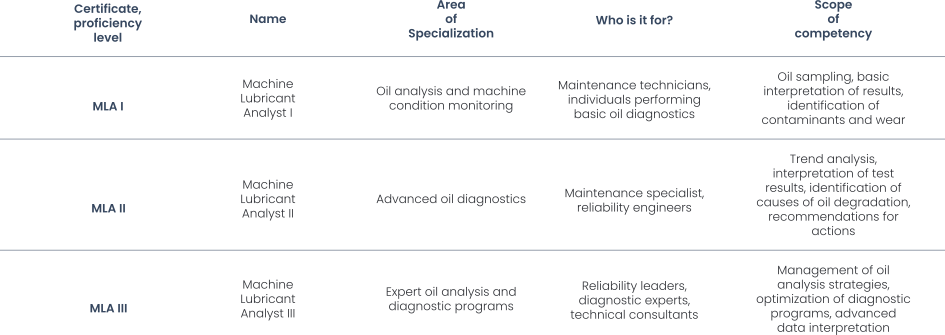
For specialists involved in machinery diagnostics based on oil analysis results. (Machine Lubricant Analyst – MLA)
Certifications:
MLA I – Machine Lubricant Analyst Level I
MLA II – Machine Lubricant Analyst Level II
MLA III – Machine Lubricant Analyst Level III
4. Laboratory Certifications – Lubricant Analysis and Testing
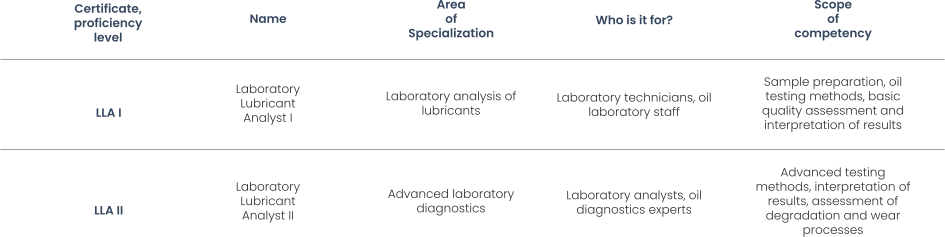
For specialists working in oil analysis laboratories who perform lubricant testing and analysis. (Laboratory Lubricant Analyst – LLA)
Certifications:
LLA I – Laboratory Lubricant Analyst Level I
LLA II – Laboratory Lubricant Analyst Level II
5. Expert and Management Certifications – Designing Reliability Strategies
For engineers, maintenance leaders, and professionals responsible for developing and improving comprehensive lubrication management programs. (Engineering & Leadership Level)
Certifications:
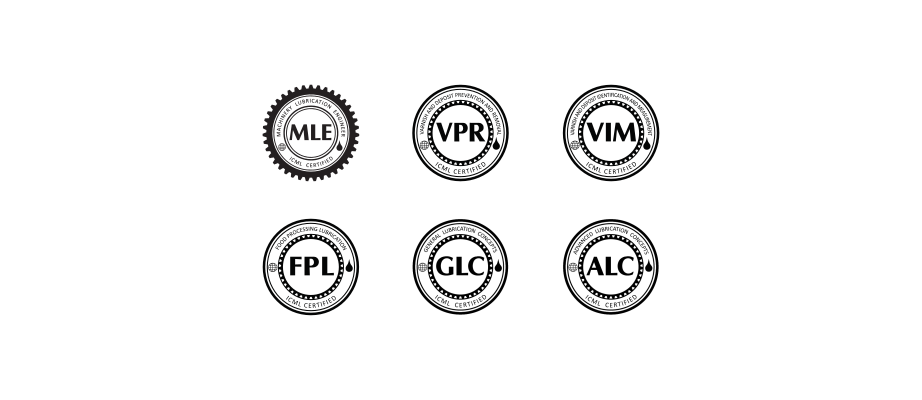
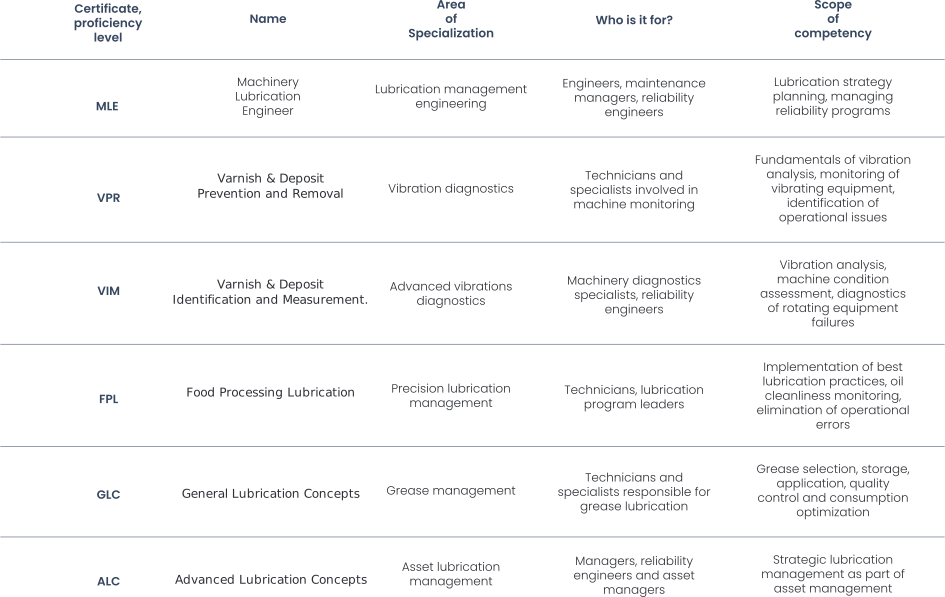
MLE – Machinery Lubrication Engineer
VPR – Varnish & Deposit Prevention and Removal
VIM – Varnish & Deposit Identification and Measurement
FPL – Food Processing Lubrication
GLC – General Lubrication Concepts
ALC – Advanced Lubrication Concepts
entry requirements and exam
information on the requirements and examination for each ICML certificate
Education and Experience
Candidates are not required to have formal education, complete specific courses, or demonstrate a minimum amount of professional experience before taking the LAT exam.
ICML recommends that candidates assess their own level of preparation, taking into account both their professional experience and the level of knowledge required in the Body of Knowledge (BoK) for the LAT certification. If needed, candidates should consult an instructor or supervisor to evaluate their readiness.
Training
Documented completion of lubrication management training aligned with the LAT Body of Knowledge is not required to take the exam.
However, ICML recommends using educational resources such as:
guides and textbooks,
classroom training,
online training courses,
training recordings,
practical exercises,
practice tests and revision materials.
These preparation methods help organize knowledge and increase the chances of achieving a successful exam result.
Important: ICML does not require, recommend, or accredit any specific preparatory course as an “official” or “approved” training program. The choice of training is the responsibility of the candidate. Before enrolling in a course, it is recommended to compare its curriculum with the official Body of Knowledge for the relevant certification and ensure that it covers all topics assessed during the exam. ICML also recommends verifying whether the trainer holds a current ICML certification at a level corresponding to the scope of the training provided. Official Bodies of Knowledge are publicly available and can be used by both training providers and candidates preparing for certification exams.
Exam
The LAT (Lubrication Apprentice Technician) certification exam consists of 70 multiple-choice questions designed to assess the candidate’s knowledge according to the LAT Body of Knowledge.
Key information:
Number of questions: 70
Exam format: multiple-choice test
Duration: 2 hours
Use of reference materials: not allowed (closed-book exam)
Passing score: minimum 70% correct answers
After achieving the required score, the candidate receives the international ICML Lubrication Apprentice Technician (LAT) certification.
→ Exam details may be subject to change. The most up-to-date information is available on the ICML website.
Machinery Lubrication Technician Level I (MLT I) is the entry-level ICML certification for professionals responsible for the practical aspects of lubrication management. The certification confirms knowledge of proper machinery lubrication principles, lubricant selection, and activities related to maintaining equipment reliability.
MLT I is primarily intended for maintenance technicians, mechanics, and professionals who perform or supervise lubrication-related tasks in industrial facilities.
Education and Experience
To obtain the Machinery Lubrication Technician Level I (MLT I) certification, candidates must have at least two years of vocational education or practical experience in one or more of the following areas:
machinery lubrication management,
engineering,
maintenance and servicing of mechanical equipment,
technical occupations related to machine operation.
The required experience may include both formal post-secondary technical education and practical knowledge gained through professional work.
Training
Candidates must complete 16 hours of documented training in lubrication management, aligned with the requirements defined in the MLT I Body of Knowledge.
For online training or recorded training materials, the required training hours may also include:
practical exercises,
practice tests,
revision materials.
However, the total time allocated to these activities cannot exceed 3 hours of the required 16 hours of training.
Candidates should have documentation confirming completion of the training, including:
participant’s name and surname,
trainer’s name, surname, and signature,
training dates,
number of completed training hours.
Important: ICML does not require completion of a specific course and does not approve particular training providers as official suppliers. Candidates choose their preferred method of preparation. Before starting a training course, it is recommended to compare its curriculum with the official Body of Knowledge for the MLT I certification and verify that the instructor holds a current ICML certification at a level corresponding to the scope of the training provided.
Exam
The Machinery Lubrication Technician Level I (MLT I) certification exam consists of 100 multiple-choice questions designed to assess the candidate’s knowledge of practical lubrication management.
Key information:
Number of questions: 100
Exam format: multiple-choice test
Duration: 3 hours
Use of reference materials: not allowed (closed-book exam)
Passing score: minimum 70% correct answers
After achieving the required score, the candidate receives the international ICML Machinery Lubrication Technician Level I (MLT I) certification, confirming fundamental technical competencies in proper machinery lubrication and maintenance.
→ Exam details may be subject to change. The most up-to-date information is available on the ICML website.
Machinery Lubrication Technician Level II (MLT II) is an advanced ICML certification level for professionals responsible for the practical management of machinery lubrication programs. The certification confirms advanced competencies in planning, implementing, and improving lubrication processes, contamination control, and applying best practices to increase equipment reliability.
MLT II is intended for experienced maintenance technicians, technical team leaders, and specialists who are responsible not only for performing lubrication tasks but also for optimizing and standardizing lubrication processes in industrial facilities.
Education and Experience
To obtain the Machinery Lubrication Technician Level II (MLT II) certification, candidates must have at least three years of vocational education or practical experience in one or more of the following areas:
machinery lubrication management,
engineering,
maintenance and servicing of mechanical equipment,
technical occupations related to machine operation.
An additional requirement is holding the following certification:
Machinery Lubrication Technician Level I (MLT I).
Training
Candidates must complete 16 hours of documented training in lubrication management, aligned with the requirements defined in the MLT II Body of Knowledge.
MLT II training builds upon the knowledge and preparation required for the MLT I certification. The total required documented training time includes:
16 hours – MLT I,
16 hours – MLT II,
32 hours of training in total.
For online training or recorded training materials, the required training hours may also include:
practical exercises,
practice tests,
revision materials.
However, the total time allocated to these activities cannot exceed 3 hours of the required 16 hours of MLT II training.
Candidates should have documentation confirming completion of the training, including:
participant’s name and surname,
trainer’s name, surname, and signature,
training dates,
total number of completed training hours.
Important: ICML does not require completion of a specific course and does not officially approve specific training providers. Candidates choose their preferred method of preparation. It is recommended that the training program corresponds with the official Body of Knowledge for the MLT II certification and that the instructor holds a current ICML certification at a level corresponding to the training being provided.
Exam
The Machinery Lubrication Technician Level II (MLT II) certification exam consists of 100 multiple-choice questions designed to assess advanced knowledge of lubrication management and machinery reliability.
Key information:
Number of questions: 100
Exam format: multiple-choice test
Duration: 3 hours
Use of reference materials: not allowed (closed-book exam)
Passing score: minimum 70% correct answers
After achieving the required score, the candidate receives the international ICML Machinery Lubrication Technician Level II (MLT II) certification, confirming advanced competencies in practical machinery lubrication management and the implementation of reliability standards in industry.
→ Exam details may be subject to change. The most up-to-date information is available on the ICML website.
Education and Experience
To obtain the Machine Lubricant Analyst I (MLA I) certification, candidates must have at least 12 months of professional experience in the field of machinery condition monitoring using lubricant analysis.
ICML defines this experience as performing oil analysis and lubricant diagnostics activities for a minimum of 16 hours per month over a period of at least one year.
Training
Before taking the exam, candidates must complete 24 hours of documented training covering the topics defined in the Body of Knowledge (BoK) for the MLA I certification.
For online training or recorded training materials, the required training time may also include:
practical exercises,
laboratory assignments,
practice tests,
revision materials.
However, the total time allocated to these activities cannot exceed 4 hours of the required 24 hours of training.
Candidates should have documentation confirming completion of the training, including:
participant’s name and surname,
trainer’s name, surname, and signature,
training dates,
total number of completed training hours.
Important: ICML does not require completion of a specific course and does not accredit any training provider as an “official” or “approved” organization. The choice of training provider is the responsibility of the candidate. Before enrolling in a course, candidates should ensure that its curriculum aligns with the official Body of Knowledge for the MLA I certification and that the trainer holds a current ICML certification at a level corresponding to the training provided.
Exam
The Machine Lubricant Analyst I (MLA I) certification exam consists of 100 multiple-choice questions designed to assess knowledge of oil analysis and machinery condition monitoring in accordance with the requirements of the MLA I Body of Knowledge.
Key information:
Number of questions: 100
Exam format: multiple-choice test
Duration: 3 hours
Use of reference materials: not allowed (closed-book exam)
Passing score: minimum 70% correct answers
After achieving the required score, the candidate receives the international ICML Machine Lubricant Analyst Level I (MLA I) certification.
→ Exam details may be subject to change. The most up-to-date information is available on the ICML website.
Specialists holding the MLA II certification are prepared to interpret complex diagnostic data, identify the causes of operational issues, and support organizations in making decisions aimed at improving equipment reliability and efficiency.
Education and Experience
To obtain the Machine Lubricant Analyst II (MLA II) certification, candidates must have at least 24 months of professional experience in machinery condition monitoring using lubricant analysis.
ICML defines this requirement as a minimum of 384 hours of professional practice, performed regularly over a two-year period (minimum 16 hours per month).
Additionally, candidates must meet one of the following requirements:
hold a valid Machine Lubricant Analyst Level I (MLA I) certification,
or take the exam as a Mature Entry Candidate, without holding the MLA I certification.
For the Mature Entry Candidate pathway, candidates must provide documentation confirming:
at least 576 additional hours of professional experience in oil diagnostics (a total of minimum 960 hours of experience),
minimum 24 hours of training covering topics from the MLA I Body of Knowledge, completed through training courses, seminars, workshops, or practical exercises.
Training
Before taking the MLA II exam, candidates must complete 24 hours of documented training aligned with the knowledge requirements defined in the MLA II Body of Knowledge.
This training serves as an extension of the previous preparation required at the MLA I level or through the Mature Entry Candidate pathway. This means that candidates should have a total of 48 hours of documented training.
For online training or recorded training materials, the required training time may also include:
practical exercises,
laboratory assignments,
practice tests,
revision materials.
However, the total time allocated to these activities cannot exceed 4 hours of the required 24 hours of training.
Candidates should have documentation confirming completion of the training, including:
participant’s name and surname,
trainer’s name, surname, and signature,
training dates,
total number of completed training hours.
Important: ICML does not specify any mandatory or officially approved preparatory course. Candidates choose their own training provider. Before enrolling in a course, it is recommended to verify that its curriculum aligns with the official Body of Knowledge for the MLA II certification and that the trainer holds a current ICML certification at a level corresponding to the training provided.
Exam
The Machine Lubricant Analyst II (MLA II) certification exam consists of 100 multiple-choice questions designed to assess knowledge and skills in accordance with the requirements of the MLA II Body of Knowledge.
Key information:
Number of questions: 100
Exam format: multiple-choice test
Duration: 3 hours
Use of reference materials: not allowed (closed-book exam)
Passing score: minimum 70% correct answers
After achieving the required score, the candidate receives the international ICML Machine Lubricant Analyst Level II (MLA II) certification, confirming advanced competencies in oil diagnostics and machinery condition monitoring.
→ Exam details may be subject to change. The most up-to-date information is available on the ICML website.
Machine Lubricant Analyst Level III (MLA III) is the highest level of ICML certification within the lubricant analysis pathway. The certification confirms expert knowledge and experience in oil diagnostics, machinery condition monitoring, and the design and improvement of lubrication management programs in industrial organizations.
Education and Experience
To obtain the Machine Lubricant Analyst III (MLA III) certification, candidates must have at least 36 months of professional experience in machinery condition monitoring using lubricant analysis.
ICML defines this requirement as performing oil diagnostics activities for a minimum of 16 hours per month over a period of at least three years.
An additional requirement for taking the exam is holding a valid certification:
Machine Lubricant Analyst Level II (MLA II).
Training
Candidates must complete 32 hours of documented training aligned with the knowledge requirements defined in the MLA III Body of Knowledge.
This training represents the next stage in competency development and is completed in addition to the previously required training for MLA I and MLA II levels. In total, candidates should have 80 hours of documented training:
24 hours – MLA I,
24 hours – MLA II,
32 hours – MLA III.
For online training or recorded training materials, the required training time may also include:
practical exercises,
laboratory assignments,
practice tests,
revision materials.
However, the total time allocated to these activities cannot exceed 5 hours of the required 32 hours of training.
Training documentation should include:
participant’s name and surname,
trainer’s name, surname, and signature,
training dates,
total number of completed training hours.
Important: ICML does not require a mandatory or officially approved preparatory course. Candidates choose their own training provider. Before enrolling in a course, it is recommended to ensure that its curriculum aligns with the official Body of Knowledge for the MLA III certification and that the training is conducted by an instructor holding a current ICML certification at the appropriate level.
Exam
The Machine Lubricant Analyst III (MLA III) certification exam consists of 100 multiple-choice questions designed to verify advanced knowledge and practical understanding of the topics covered in the MLA III Body of Knowledge.
Key information:
Number of questions: 100
Exam format: multiple-choice test
Duration: 3 hours
Use of reference materials: not allowed (closed-book exam)
Passing score: minimum 70% correct answers
After achieving the required score, the candidate receives the international ICML Machine Lubricant Analyst Level III (MLA III) certification, confirming expert competencies in oil analysis, machinery condition monitoring, and management of diagnostic programs.
→ Exam details may be subject to change. The most up-to-date information is available on the ICML website.
Laboratory Lubricant Analyst Level I (LLA I) is the entry-level ICML certification for specialists involved in laboratory lubricant analysis and machinery condition diagnostics based on oil testing.
The certification confirms knowledge of basic oil testing methods, sample preparation, laboratory analysis procedures, and interpretation of results used in industrial equipment condition monitoring programs.
LLA I is primarily intended for oil laboratory employees, diagnosticians, and specialists performing lubricant testing and analysis as part of maintenance and reliability activities.
LLA and MLA – what is the difference?
“`
The LLA (Laboratory Lubricant Analyst) and MLA (Machine Lubricant Analyst) certifications both relate to lubricant analysis; however, they focus on different areas of expertise.
LLA is a pathway designed for laboratory specialists who perform oil testing, prepare samples, operate analytical methods, and are responsible for the quality and accuracy of laboratory results.
MLA is a pathway for specialists involved in machinery diagnostics who use oil analysis results to assess equipment condition, identify operational issues, and support maintenance decisions.
In practice, both competencies complement each other – the laboratory provides reliable diagnostic data, while the MLA specialist interprets this information in the context of a specific machine and production process.
“`
Education and Experience
To obtain the Laboratory Lubricant Analyst Level I (LLA I) certification, candidates must have:
a minimum of 12 months of experience in laboratory testing and analysis of lubricants used for machinery condition monitoring,
at least 1,200 hours of practical experience performing laboratory tests and analyses.
The experience should include actual work with oil samples and performing analyses that support the assessment of equipment condition.
Training
Candidates must complete 24 hours of documented training aligned with the knowledge requirements defined in the LLA I Body of Knowledge.
For online training or recorded training materials, the required training time may also include:
practical exercises,
laboratory assignments,
practice tests,
revision materials.
However, the total time allocated to these activities cannot exceed 4 hours of the required 24 hours of training.
Candidates should have documentation confirming completion of the training, including:
participant’s name and surname,
trainer’s name, surname, and signature,
training dates,
total number of completed training hours.
Important: ICML does not require completion of a specific course and does not approve selected training providers as official suppliers. Candidates choose their own method of preparation for the exam. It is recommended that the training program corresponds with the official Body of Knowledge for the LLA I certification and that the instructor holds a current ICML certification at a level corresponding to the training provided.
Exam
The Laboratory Lubricant Analyst Level I (LLA I) certification exam consists of 70 multiple-choice questions designed to assess the candidate’s knowledge of laboratory lubricant analysis and the use of test results in machinery condition monitoring.
Key information:
Number of questions: 70
Exam format: multiple-choice test
Duration: 2 hours
Use of reference materials: not allowed (closed-book exam)
Passing score: minimum 70% correct answers
After achieving the required score, the candidate receives the international ICML Laboratory Lubricant Analyst Level I (LLA I) certification, confirming competencies in performing basic laboratory oil analyses and using test results for machinery diagnostics.
→ Exam details may be subject to change. The most up-to-date information is available on the ICML website.
Laboratory Lubricant Analyst Level II (LLA II) is an advanced ICML certification level for laboratory specialists involved in the testing and analysis of lubricants used for machinery condition monitoring.
The LLA II certification confirms advanced competencies in performing laboratory analyses, evaluating lubricant quality, and interpreting test results that support the diagnostics of industrial equipment.
LLA II is intended for experienced laboratory analysts responsible for the accuracy of testing processes, the quality of results, and providing reliable data used in machinery reliability programs.
LLA and MLA – what is the difference?
“`
The LLA (Laboratory Lubricant Analyst) and MLA (Machine Lubricant Analyst) certifications both relate to lubricant analysis; however, they focus on different areas of expertise.
LLA is a pathway for laboratory specialists who perform oil testing, prepare samples, operate analytical methods, and are responsible for the quality and reliability of laboratory results.
MLA is a pathway for specialists involved in machinery diagnostics who use oil analysis results to assess equipment condition, identify operational issues, and recommend maintenance actions.
Both specializations complement each other – the laboratory provides precise diagnostic data, while the MLA specialist interprets this information in the context of a specific machine and industrial process.
“`
Education and Experience
To obtain the Laboratory Lubricant Analyst Level II (LLA II) certification, candidates must have:
a minimum of 24 months of experience in laboratory testing and analysis of lubricants used for machinery condition monitoring,
at least 2,400 hours of practical experience performing laboratory tests and analyses.
Additionally, candidates must meet one of the following requirements:
hold a Laboratory Lubricant Analyst Level I (LLA I) certification,
or take the exam as a Mature Entry Candidate without holding the LLA I certification.
For the Mature Entry Candidate pathway, candidates must document:
an additional 12 months of professional experience in laboratory lubricant testing and analysis,
a minimum of 1,200 additional hours of practical testing and analysis,
a minimum of 24 hours of training covering topics aligned with the LLA I Body of Knowledge.
This results in a minimum total requirement of:
36 months of professional experience,
3,600 hours of practical laboratory work.
Training
Candidates must complete 24 hours of documented training aligned with the knowledge requirements defined in the LLA II Body of Knowledge.
LLA II training builds upon the previous preparation required for the LLA I certification or the Mature Entry Candidate pathway.
The total required documented training time includes:
24 hours – LLA I or training required for the Mature Entry Candidate pathway,
24 hours – LLA II,
48 hours of training in total.
For online training or recorded training materials, the required training time may also include:
practical exercises,
laboratory assignments,
practice tests,
revision materials.
However, the total time allocated to these activities cannot exceed 4 hours of the required 24 hours of LLA II training.
Candidates should have training documentation including:
participant’s name and surname,
trainer’s name, surname, and signature,
training dates,
number of completed training hours.
Important: ICML does not require completion of a specific course and does not officially designate approved training providers. Candidates choose their own method of exam preparation. It is recommended to compare the training program with the official Body of Knowledge for the LLA II certification and ensure that the instructor holds a current ICML certification at a level corresponding to the training provided.
Exam
The Laboratory Lubricant Analyst Level II (LLA II) certification exam consists of 100 multiple-choice questions designed to assess the candidate’s advanced knowledge of laboratory lubricant analysis.
Key information:
Number of questions: 100
Exam format: multiple-choice test
Duration: 3 hours
Use of reference materials: not allowed (closed-book exam)
Passing score: minimum 70% correct answers
After achieving the required score, the candidate receives the international ICML Laboratory Lubricant Analyst Level II (LLA II) certification, confirming advanced competencies in laboratory oil diagnostics and providing data that supports the reliability of industrial equipment.
→ Exam details may be subject to change. The most up-to-date information is available on the ICML website.
Machinery Lubrication Engineer (MLE) is an advanced ICML certification designed for professionals responsible for designing, developing, and managing lubrication management strategies in industrial organizations.
The certification confirms broad engineering knowledge in machinery lubrication, lubricant selection, contamination control, reliability analysis, and the development of programs that optimize equipment operation and performance.
MLE is primarily intended for engineers, maintenance leaders, reliability specialists, and professionals responsible for implementing and developing Machinery Lubrication Excellence strategies in industrial facilities.
Unlike technical MLT certifications and analytical MLA certifications, the MLE certification focuses on a strategic and engineering level – covering not only the execution of analyses and lubrication tasks but also the design, management, and continuous improvement of the entire lubrication management program.
Education and Experience
To obtain the Machinery Lubrication Engineer (MLE) certification, candidates must have at least 5 years of education or professional experience (post-secondary education or practical experience) in one or more of the following areas:
engineering,
maintenance and servicing of mechanical equipment,
technical occupations related to machine operation,
lubrication management,
oil analysis,
machinery condition monitoring.
Engineering education and previous ICML certifications are not required to take the MLE exam.
However, holding certifications from previous levels, such as:
Machine Lubricant Analyst (MLA),
Machinery Lubrication Technician (MLT),
can significantly support exam preparation by providing practical knowledge of oil analysis, maintenance practices, and machinery lubrication management.
Training
ICML does not define a mandatory number of training hours or require completion of a specific preparatory course before taking the MLE exam.
However, candidates are encouraged to use available preparation methods, such as:
specialized lubrication management training,
MLE exam preparation courses,
ICML educational materials and study guides,
practical experience in managing lubrication programs.
Preparation should correspond with the official MLE Body of Knowledge, which defines the topics covered during the exam.
Important: ICML does not require, recommend, or approve any specific course as an official MLE training program. Candidates choose their own preparation method. It is recommended to ensure that the selected training covers all knowledge areas included in the official MLE Body of Knowledge.
Exam
The Machinery Lubrication Engineer (MLE) certification exam is one of the most demanding ICML exams and assesses comprehensive knowledge of designing and managing lubrication management programs.
Key information:
Number of questions: 150
Exam format: multiple-choice test
Duration: 4 hours
Use of reference materials: not allowed (closed-book exam)
Passing score: minimum 70% correct answers
Due to the exam duration (4 hours), its organization may require additional arrangements, especially when conducted as part of an examination session that includes other ICML certifications.
After achieving the required score, the candidate receives the prestigious ICML Machinery Lubrication Engineer (MLE) certification, confirming competencies in strategic lubrication management and machinery reliability optimization.
→ Exam details may be subject to change. The most up-to-date information is available on the ICML website.
Varnish Prevention and Removal (VPR) is a specialized ICML certification focused on the formation of deposits and varnish in oil systems, as well as methods for preventing their formation and effectively removing them.
The certification confirms knowledge of the mechanisms behind the formation of varnish contaminants, their impact on equipment reliability, and methods used to reduce the risk of failures and improve lubrication system cleanliness.
VPR is particularly relevant for specialists involved in the operation and maintenance of equipment such as turbines, compressors, hydraulic systems, and other machinery requiring high levels of oil cleanliness.
Education and Experience
To obtain the Varnish Prevention and Removal (VPR) certification, candidates must meet one of the following requirements:
hold a Machine Lubricant Analyst Level I (MLA I) certification,
or hold a Machinery Lubrication Technician Level I (MLT I) certification,
or have a minimum of 1 year of professional experience working with industrial lubricants and knowledge covering the topics defined in the Varnish and Deposit Prevention and Removal Body of Knowledge.
The VPR certification is intended for professionals with basic knowledge of machinery lubrication who want to expand their competencies in the area of deposit control and lubricant degradation products.
Training
ICML does not define a mandatory number of training hours or require completion of a specific preparatory course before taking the VPR exam.
However, candidates are encouraged to prepare based on the official Varnish and Deposit Prevention and Removal Body of Knowledge, which covers topics including:
mechanisms of varnish and deposit formation in lubricants,
factors affecting lubricant degradation,
methods for detecting and assessing contamination levels,
techniques for preventing deposit formation,
methods for removing lubricant degradation products.
Important: ICML does not require completion of a specific training course and does not officially designate approved course providers. Candidates choose their own method of exam preparation. It is recommended to use materials aligned with the official Body of Knowledge for the VPR certification.
Exam
The Varnish Prevention and Removal (VPR) certification exam consists of 25 multiple-choice questions designed to assess the candidate’s knowledge of deposit prevention and removal methods.
Key information:
Number of questions: 25
Exam format: multiple-choice test
Duration: 45 minutes
Use of reference materials: not allowed (closed-book exam)
Passing score: minimum 70% correct answers
After achieving the required score, the candidate receives the ICML Varnish Prevention and Removal (VPR) certification, confirming specialized knowledge in deposit control and maintaining high cleanliness levels in oil systems.
→ Exam details may be subject to change. The most up-to-date information is available on the ICML website.
Varnish Identification and Measurement (VIM) is a specialized ICML certification focused on the identification, assessment, and measurement of varnish deposits formed in oil systems.
The certification confirms knowledge of methods used to detect oil degradation products, assess contamination levels, and interpret test results that help determine risks associated with the presence of deposits in lubrication systems.
VIM is intended for specialists involved in machinery reliability, oil diagnostics, and lubrication system cleanliness management – particularly for equipment sensitive to varnish and deposit formation, such as turbines, compressors, and precision hydraulic systems.
Education and experience
To obtain the Varnish Identification and Measurement (VIM) certification, candidates must meet one of the following requirements:
hold the Machine Lubricant Analyst Level I (MLA I) certification,
or hold the Machinery Lubrication Technician Level I (MLT I) certification,
or have a minimum of 1 year of professional experience working with industrial lubricants and knowledge covering the topics defined in the Varnish Identification and Measurement Body of Knowledge.
The VIM certification is intended for professionals with basic knowledge of machinery lubrication who want to develop their skills in identifying and assessing problems resulting from the presence of deposits in lubricating oils.
Training
ICML does not specify a mandatory number of training hours or require completion of a specific preparatory course before taking the VIM exam.
Candidates are encouraged to prepare based on the official Varnish Identification and Measurement Body of Knowledge, which covers topics including:
mechanisms of oil degradation product formation,
methods for identifying varnish deposits,
techniques for measuring and assessing deposit levels,
interpretation of oil analysis results,
the impact of contaminants on equipment reliability.
Important: ICML does not require completion of a specific training course and does not designate officially approved training providers. Candidates choose their own method of preparation. It is recommended to use training materials that are aligned with the official Body of Knowledge for the VIM certification.
Exam
The Varnish Identification and Measurement (VIM) certification exam consists of 25 multiple-choice questions that assess the candidate’s knowledge of identifying and measuring deposits formed in lubricants.
Key information:
Number of questions: 25
Exam format: multiple-choice test
Duration: 45 minutes
Use of reference materials: no (closed-book exam)
Passing score: minimum 70% correct answers
After achieving the required score, the candidate receives the ICML Varnish Identification and Measurement (VIM) certification, confirming specialized knowledge in the detection and assessment of oil deposits and their impact on machinery reliability.
→ Exam details may change. Current information is available on the ICML website.
Food Processing Lubrication (FPL) is a specialized ICML certification focused on lubrication management in food processing facilities and industries requiring strict hygiene control and production process safety standards.
The certification confirms knowledge of the principles of proper selection, application, and control of lubricants used in the food processing industry, with particular emphasis on product safety requirements, contamination prevention, and machinery reliability.
FPL is intended for maintenance specialists, engineers, technicians, and professionals responsible for lubrication management in food processing, beverage, pharmaceutical, and other industries requiring high cleanliness standards.
Education and experience
To obtain the Food Processing Lubrication (FPL) certification, candidates must meet one of the following requirements:
hold the Machine Lubricant Analyst Level I (MLA I) certification,
or hold the Machinery Lubrication Technician Level I (MLT I) certification,
or have a minimum of 1 year of professional experience working with industrial lubricants and knowledge covering the topics defined in the Food Processing Lubrication Body of Knowledge.
The FPL certification is intended for professionals with basic knowledge of machinery lubrication who want to develop their skills in the specific requirements of lubricating machinery operating in the food processing industry.
Training
ICML does not specify a mandatory number of training hours or require completion of a specific preparatory course before taking the FPL exam.
Candidates are encouraged to prepare based on the official Food Processing Lubrication Body of Knowledge, which covers topics including:
requirements for lubricants used in the food processing industry,
principles of using food-grade oils and greases approved for food processing applications,
product contamination risk control,
best practices for lubrication management in production facilities,
the impact of proper lubrication on equipment safety and reliability.
Important: ICML does not require completion of a specific training course and does not designate officially approved training providers. Candidates choose their own method of preparation. It is recommended to use training materials that are aligned with the official Body of Knowledge for the FPL certification.
Exam
The Food Processing Lubrication (FPL) certification exam consists of 25 multiple-choice questions that assess the candidate’s knowledge of lubrication management principles in the food processing industry.
Key information:
Number of questions: 25
Exam format: multiple-choice test
Duration: 45 minutes
Use of reference materials: no (closed-book exam)
Passing score: minimum 70% correct answers
After achieving the required score, the candidate receives the ICML Food Processing Lubrication (FPL) certification, confirming specialized knowledge in safe and effective lubrication management in food processing facilities.
→ Exam details may change. Current information is available on the ICML website.
Grease Lubrication Certification (GLC) is a specialized ICML certification focused on proper grease lubrication management and the principles of grease selection, storage, application, and control in industrial equipment.
The certification confirms knowledge of key aspects related to the use of lubricating greases, including the impact of grease properties on machinery reliability, proper grease application, and best practices for reducing the risk of failures caused by improper lubrication.
GLC is intended for technicians, mechanics, maintenance specialists, and professionals responsible for operating equipment where bearings and other components requiring grease lubrication are used.
Education and experience
To obtain the Grease Lubrication Certification (GLC), candidates are not required to meet specific professional experience or work history requirements.
Candidates should independently assess their level of preparation and competence against the knowledge requirements defined in the GLC Body of Knowledge, also using guidance from instructors or professional supervisors when needed.
The GLC certification is available both to individuals beginning to develop their grease lubrication skills and to experienced professionals who want to formally confirm their knowledge.
Training
Candidates must complete a minimum of 5 hours of documented training covering the topics defined in the GLC Body of Knowledge.
The required training time may also include:
online training or recorded educational materials,
practical exercises,
practice tests,
review materials.
The time allocated for these activities cannot exceed 1 hour of the required 5 hours of training.
Training documentation submitted to ICML should include:
participant’s name and surname,
instructor’s name, surname, and signature,
training completion dates,
number of completed training hours.
Important: ICML does not require, recommend, or approve any specific training course as an official GLC course. Candidates choose their own method of preparation for the exam. It is recommended to compare the training program with the official GLC Body of Knowledge to ensure that all required topics are covered.
Exam
The Grease Lubrication Certification (GLC) exam consists of 70 multiple-choice questions that assess the candidate’s knowledge of proper grease application and grease lubrication management.
Key information:
Number of questions: 70
Exam format: multiple-choice test
Duration: 2 hours
Use of reference materials: no (closed-book exam)
Passing score: minimum 70% correct answers
After achieving the required score, the candidate receives the ICML Grease Lubrication Certification (GLC), confirming competence in effective grease lubrication management and the application of best practices that improve machinery reliability.
→ Exam details may change. Current information is available on the ICML website.
Application Lubrication Certification (ALC) is a specialized ICML certification focused on the proper application of lubricants in operational practice and the principles of effective machine lubrication management.
The certification confirms knowledge of the fundamental principles related to lubricant application, including the proper selection of lubrication methods, control of lubricant quantities, prevention of common operational errors, and implementation of best practices that improve equipment reliability.
ALC is intended for individuals performing or supervising lubrication activities, particularly maintenance technicians, machine operators, mechanics, and specialists responsible for daily machine operation.
Education and Experience
To obtain the Application Lubrication Certification (ALC), candidates are not required to meet any specific requirements regarding professional experience or years of service.
Candidates should independently assess their preparation and competencies against the knowledge requirements defined in the ALC Body of Knowledge, also taking into account guidance from instructors or professional supervisors.
The ALC certification is intended both for individuals beginning their development in machinery lubrication and for specialists who want to organize and formally confirm their knowledge of proper lubricant application practices.
Training
Candidates must meet one of the following training requirements:
complete 10 hours of documented training covering the knowledge requirements defined in the ALC Body of Knowledge,
or complete the General Lubrication Concepts (GLC) training course (5 hours) and an additional 5 hours of documented training aligned with the ALC Body of Knowledge.
The required training time may also include:
online training or recorded educational materials,
practical exercises,
practice exams,
review materials.
The time allocated to these activities cannot exceed 1 hour of the required training duration.
Training documentation submitted to ICML should include:
participant’s full name,
instructor’s full name and signature,
training dates,
total number of completed training hours.
Important: ICML does not require, recommend, or approve any specific training course as an official ALC course. Candidates choose their own preparation method. It is recommended to compare the training program with the official ALC Body of Knowledge to ensure that it covers all required topics.
Exam
The Application Lubrication Certification (ALC) exam consists of 70 multiple-choice questions assessing the candidate’s knowledge of proper lubricant application and practical aspects of machinery lubrication.
Key information:
Number of questions: 70
Exam format: multiple-choice test
Duration: 2 hours
Use of reference materials: not allowed (closed-book exam)
Passing score: minimum 70% correct answers
After achieving the required score, the candidate receives the ICML Application Lubrication Certification (ALC), confirming knowledge of proper lubricant application principles and best practices supporting machinery reliability.
→ Exam details may change. Current information is available on the ICML website.
ICML competency development pathways
The ICML certification system has been designed to address different levels of experience and professional specialization. Candidates can develop their competencies from fundamental machinery lubrication concepts, through technical aspects of maintenance, to advanced diagnostics and reliability strategy management.
The main certification pathways include:
LAT – fundamentals of lubrication practices for individuals beginning their professional development in this area.
MLT I–II – a pathway for technicians and specialists responsible for the practical aspects of machinery lubrication.
MLA I–III – a pathway for professionals involved in oil analysis, diagnostics, and machinery condition monitoring.
LLA I–II – certification for laboratory specialists performing lubricant testing and analysis.
MLE – the highest expert level, focused on designing and managing comprehensive lubrication excellence strategies.
Additional specialist certifications, such as VPR, VIM, FPL, GLC, and ALC, enable professionals to expand their competencies in specific areas, including varnish and deposit control, specialized lubrication, and industry-specific applications.
źródło: icmlonline.com/roadmap.aspx
How to verify an ICML certificate holder?
ICML maintains a public registry of certified professionals that allows users to verify the status of issued certifications.
Verification can be performed based on the details of the certified individual. The registry allows users to confirm, among other things, the specialist’s name, type of certification obtained, and its current status.
The current ICML certified professionals registry is available on the icmlonline.com website.
The public list of certified professionals increases the transparency of the ICML certification system and enables employers and organizations to verify the qualifications of specialists responsible for lubrication management, oil analysis, and machinery reliability.
FAQ
ICML certificates – frequently asked questions
ICML stands for the International Council for Machinery Lubrication – an international organisation dedicated to standardising knowledge and certifying competence in the fields of lubrication management, oil analysis and machine reliability.
Yes. ICML certificates provide international recognition of competence in the fields of machine lubrication, lubricant analysis and maintenance. The ICML certification system is used by specialists and industrial companies in many countries around the world.
The MLT (Machinery Lubrication Technician) focuses on the practical aspects of lubrication management, such as the selection of lubricants, their storage, application and the organisation of the machine lubrication process.
MLA (Machine Lubricant Analyst) focuses primarily on oil analysis, the interpretation of test results and the use of information derived from lubricants to assess the technical condition of equipment.
Yes. Many specialists hold several ICML certificates, which complement one another. Combining expertise in machine lubrication, oil diagnostics and laboratory analysis enables a comprehensive development of knowledge regarding equipment reliability.
Yes. ICML certificates are subject to a re-certification process. The purpose of certificate renewal is to confirm that the specialist maintains up-to-date knowledge, develops their skills and remains professionally active in the field of lubrication management.
Szczegółowe wymagania dotyczące recertyfikacji zależą od konkretnego certyfikatu i aktualnych zasad określonych przez ICML.
Yes. The ICML maintains a public register of certified specialists, which allows you to check whether a particular person holds a valid certificate.
This verification allows you to confirm, amongst other things, the name of the certified specialist, the type of certificate obtained and its current status. This enables employers and companies to check the qualifications of those responsible for lubrication management, oil analysis and machine reliability.
No. The requirements depend on the type of certificate.
Some basic or specialist certificates do not require a specific length of service, whilst more advanced certifications, such as MLA II, MLA III, MLT II or MLE, require documented professional experience and the fulfilment of additional requirements.
Selected ICML certificates, including the MLA, have been developed in line with the requirements of standards governing the qualifications of personnel involved in machine condition monitoring, such as ISO 18436-4.
These standards set out the competence requirements for individuals carrying out activities related to the diagnosis and monitoring of the technical condition of equipment.
Nie udało się nawiązać połączenia z siecią. Upewnij się, że masz dostęp do internetu, a następnie odśwież stronę, aby kontynuować korzystanie z serwisu.