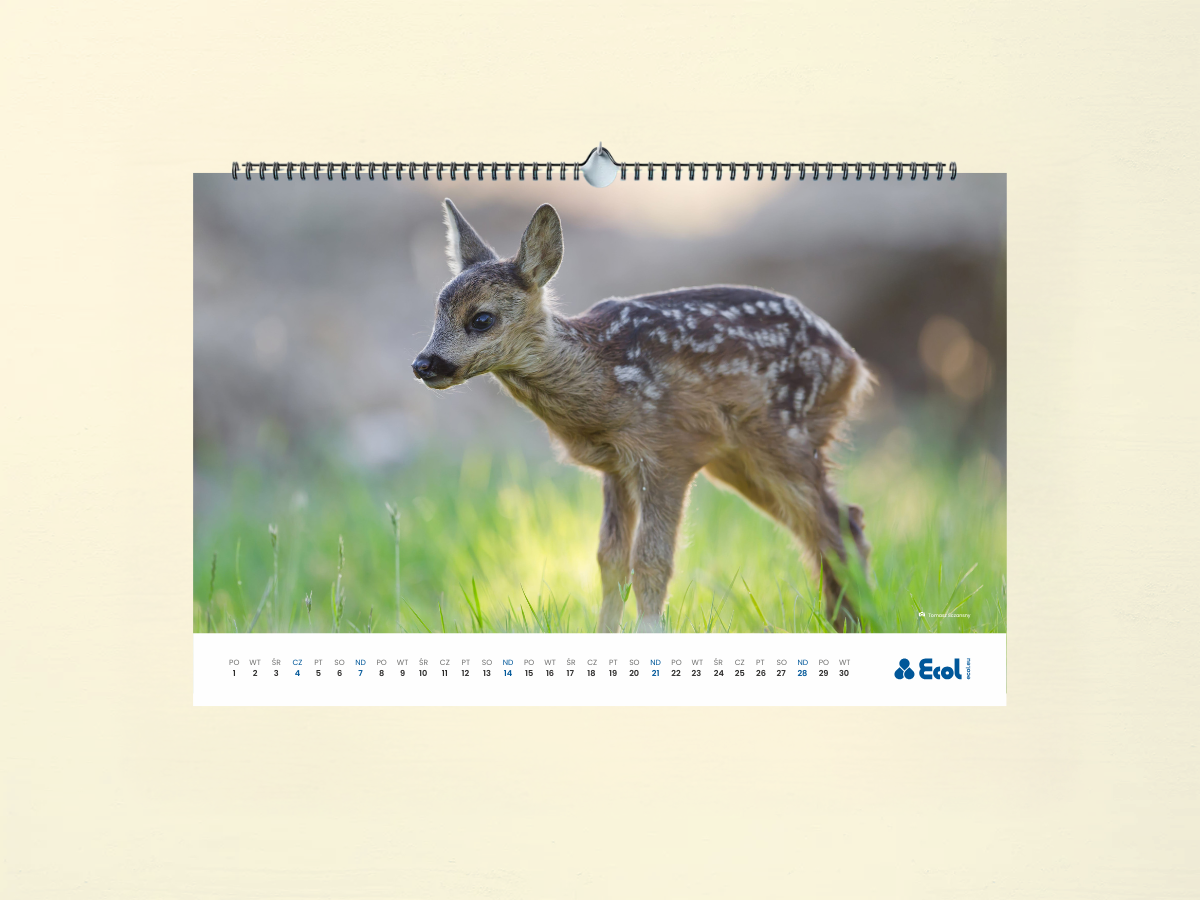
Eyes of the Forest – Ecol 2026 calendar

The Ecol 2026 calendar – Eyes of the Forest is a story about observing nature carefully and noticing what remains invisible on a daily basis. In this year’s edition of the Ecol company calendar, we invite you on a journey through the forests, meadows and wetlands of Upper Silesia – places close to both our company and the author of the photographs.

kalendarz-2026-2

Ecol 2026 calendar

The Eyes of the Forest

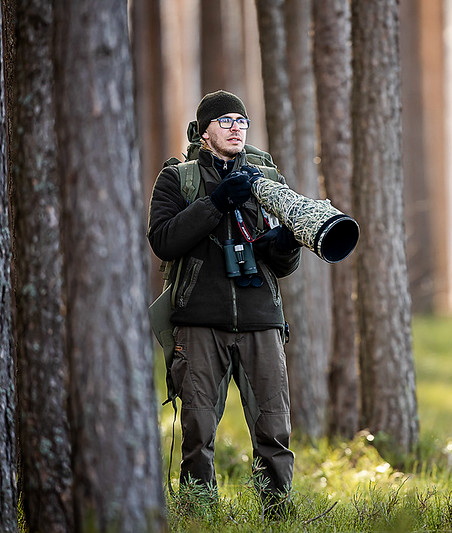
This year’s Ecol calendar is a collection of photographs by Tomasz Sczanski, a renowned nature photographer, forester and ornithologist, who has been documenting the natural world with extraordinary attentiveness and sensitivity for many years.

Each of the thirteen photographs was taken in Upper Silesia – a region with which both the author of the photographs and the Ecol company are associated, and which hides much more natural wealth than one might think.

The photographs in the calendar are a record of true natural wonders – shots that require long preparation, patience and a perfect sense of timing. As part of our post, each photograph will be accompanied by the author’s commentary, revealing its history, context and the story behind its creation.

Tomasz Sczansny is the author of all the photographs and stories in this year’s Ecol calendar. Since he began his adventure with photography in 2003, he has been accompanied by a passion for nature, especially ornithology. Nature has become the main subject of his photographs. In his photographs, he strives to show the natural wealth of Upper Silesia and, at the same time, debunk the myth of ‘black Silesia’.

As he says about himself: Photography is much more than just pressing the shutter button for me. It is a process that begins with observation, through weather analysis, to long preparations in the field. That is why every photograph has its own story. I often look for unusual shots and unusual perspectives to show familiar elements of nature in a completely new light. Thanks to photography, I can take a piece of the world that I see through my lens with me and show it to those who are often unaware of the diversity of nature.”
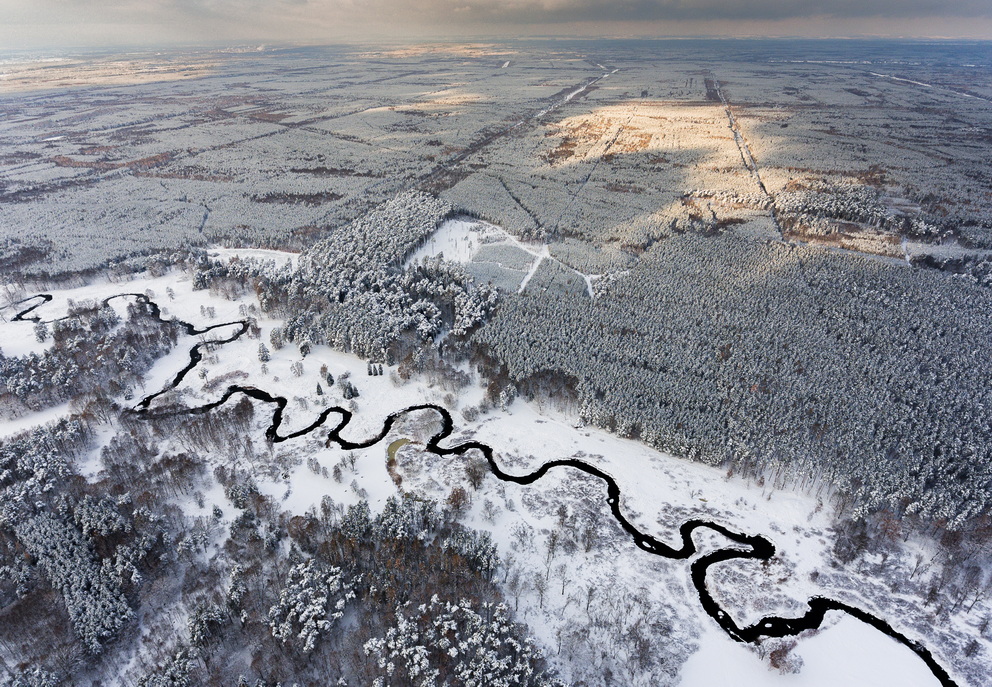
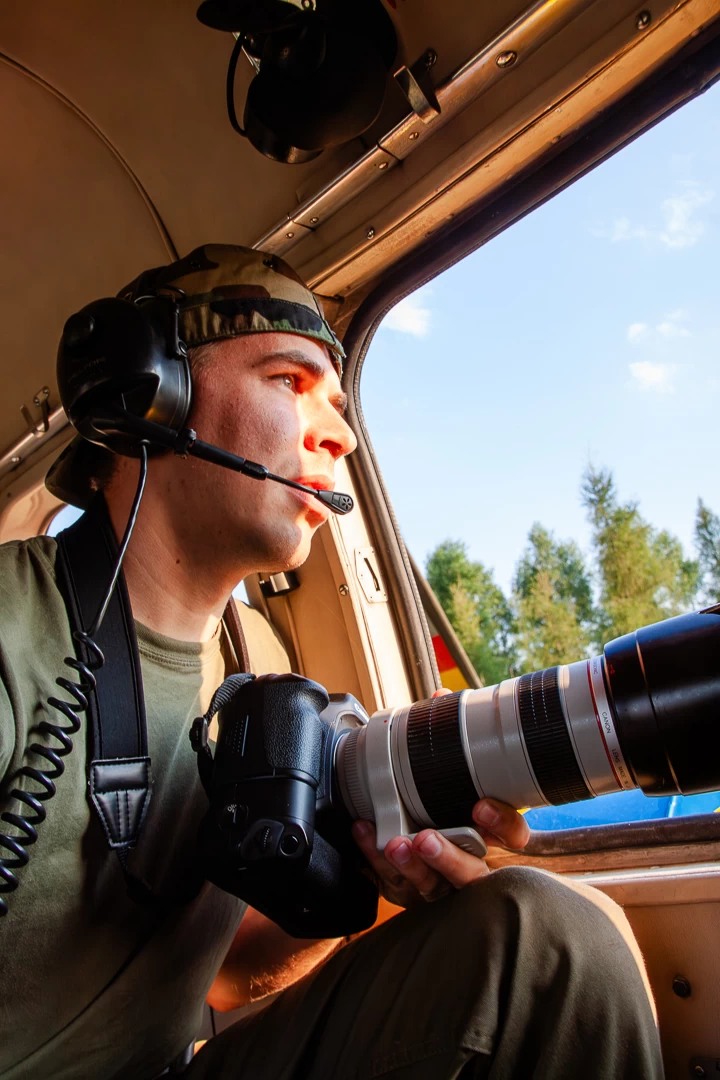
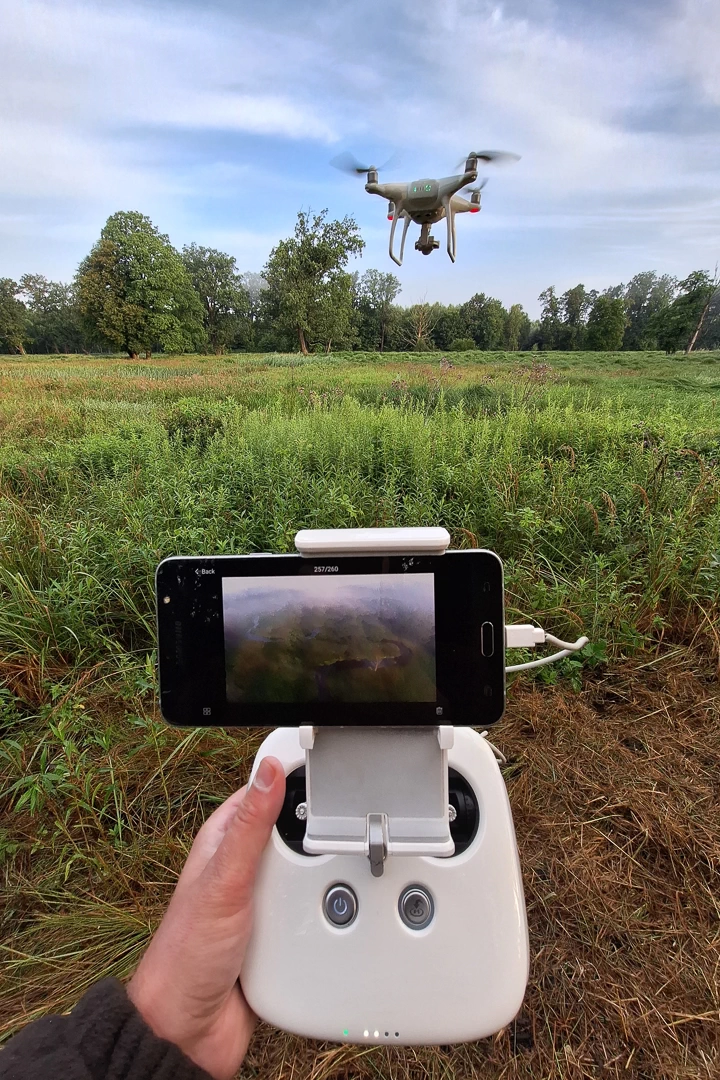
cover: the meanders of the Ruda River

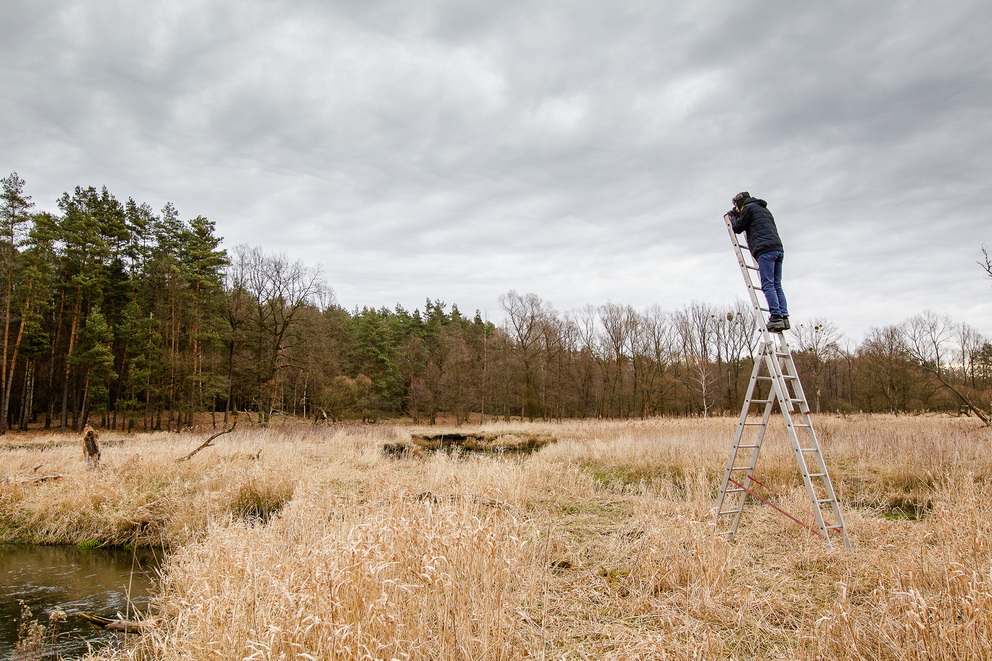
– The meanders of the River Ruda, our Silesian Amazon, have long been a photographic dream of mine. Before drones became widely used in photography, I tried everything to get a bird’s-eye view of the river, even a tall ladder, which allowed me to capture only a fragment of one bend.

– The real breakthrough came with a helicopter flight, during which the pilot flew exactly where I pointed. One of the windows was removed for a better view, and I, strapped to my seat, was able to see the whole of this extraordinary structure for the first time. That image will stay with me forever.

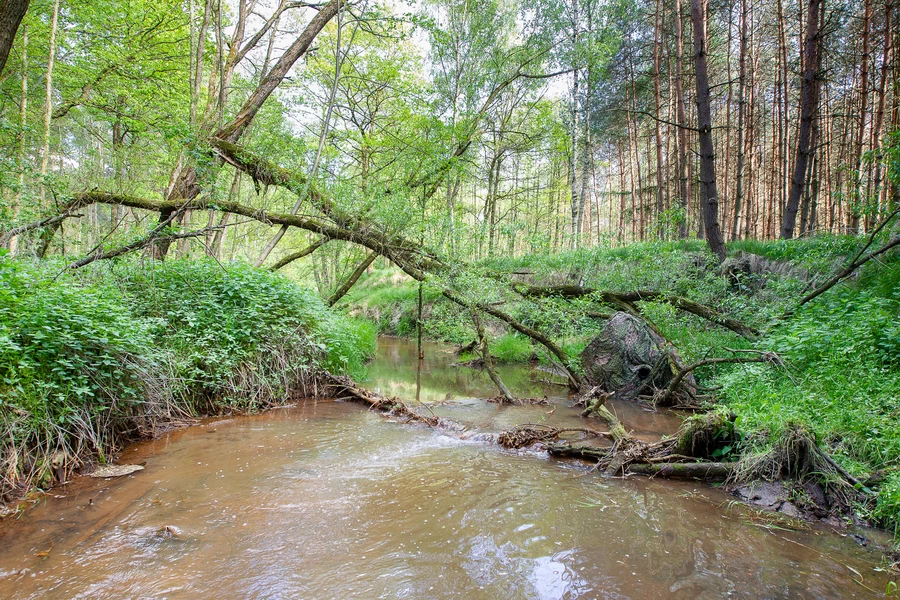
– Due to its inaccessibility and lack of well-trodden paths, the Ruda River valley remains a refuge for many animal species. It is there that I took many of my photographs. The river attracts not only aquatic species, but also land animals, which come here to quench their thirst or find refreshment on hot days.

– A few years later, with the popularisation of drones, in 2016 I took my first photographs of the river using them. They not only gave me the freedom to fly at the right moment and in favourable weather conditions, but also the opportunity to regularly observe the changes taking place in the riverbed – the river is constantly “alive” and transforming its course. In the background of the photo, you can see the area after the 1992 fire, when the fire consumed about 9,000 hectares of forest, the largest forest fire in Poland’s post-war history.


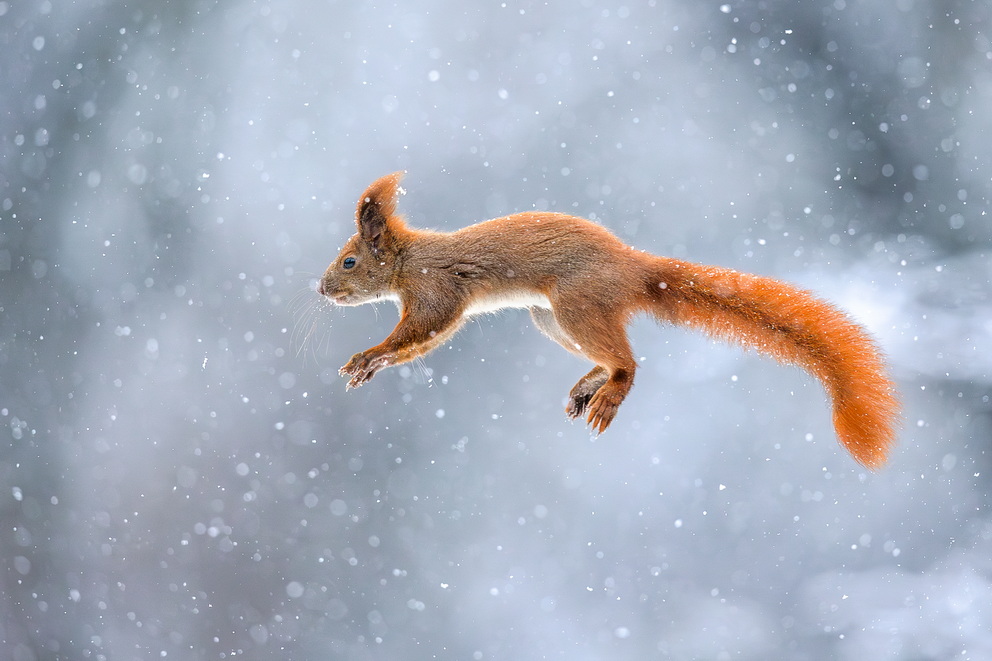
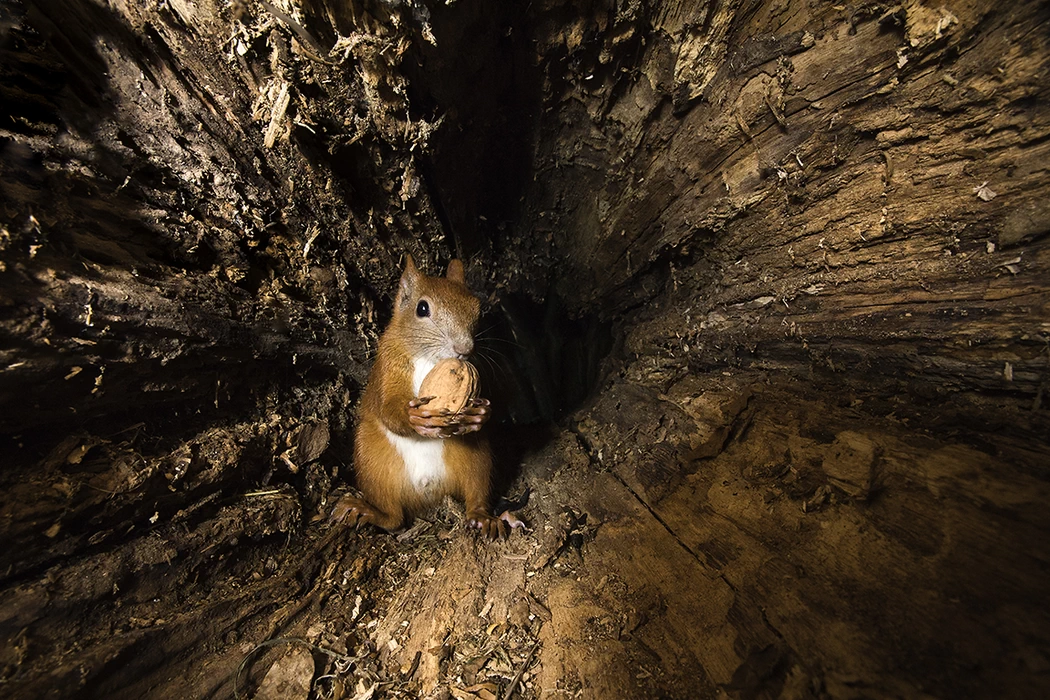
January: squirrel

‘(…) I had to wait almost two years for a photograph that I was truly satisfied with.’

– Living in the forest, I share my space with many animals that have naturally become part of my garden. I consciously invite some of them – by hanging nesting boxes, setting up water troughs and feeders – while others appear on their own, attracted by the presence of fruit trees. I have long been accustomed to the fact that what grows around my house does not belong exclusively to me. Animals use these resources without scruples, not always willing to share them.

– Squirrels are the best example. Several of them regularly strip my two walnut trees so thoroughly that I have yet to taste a single nut. They begin their feast while the fruit is still in its green husk. At one point, I thought that since I don’t get any culinary benefits from this, I would try to turn this situation into something else, into photography.

– I observed their behaviour for a long time: the route they take from forest to tree, their take-off and landing spots, and their long, precise jumps between branches. All I had to do was find the right spot and wait patiently. Although it sounds simple today, I had to wait almost two years for a photo that I was really happy with.

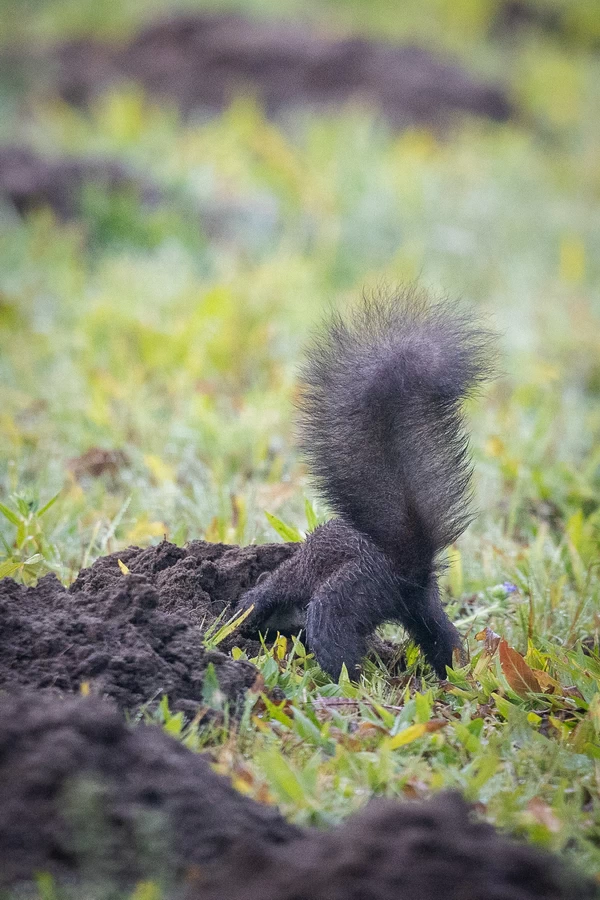
– Over time, my friends, knowing about the ‘gang of squirrels’ roaming my garden, began to bring nuts. This created further opportunities for photography – especially when the squirrels made long jumps, using their long, fluffy tails as rudders and flight stabilisers. At the same time, I was able to observe their foresight up close: excess food disappeared into molehills, crevices in logs and nooks and crannies in the ground, creating pantries for when the nuts ran out. It was from such moments of patient observation and repeated attempts that this photograph was created.


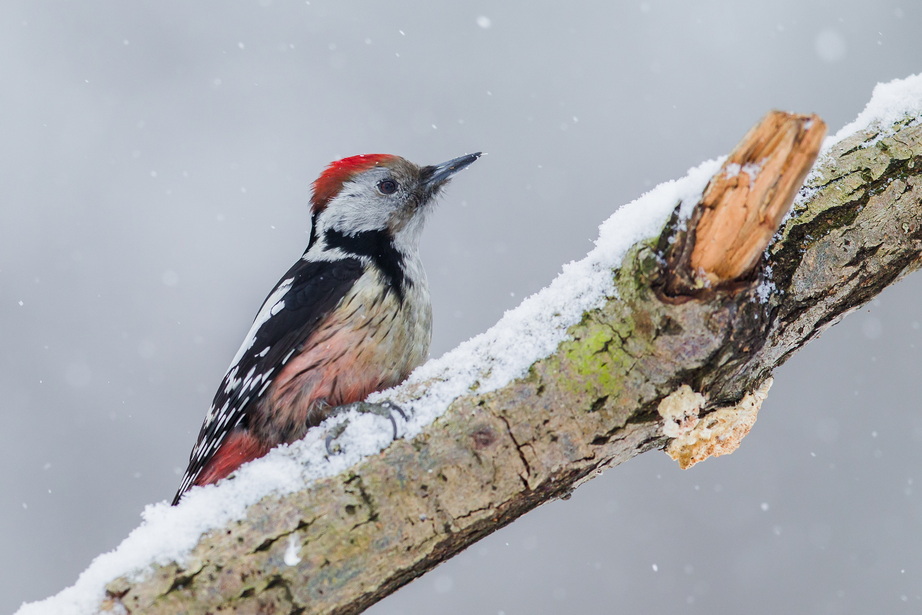
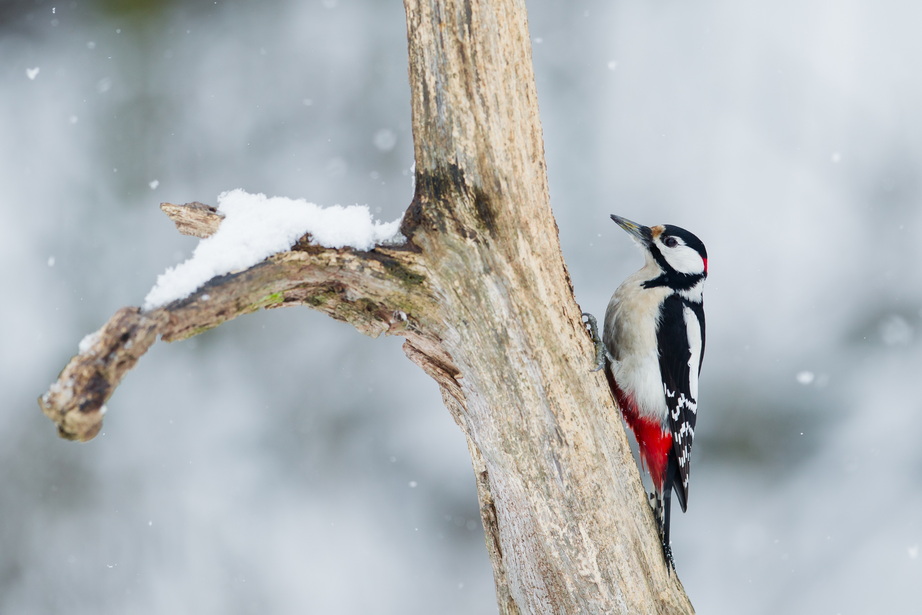
February: woodpecker

– A bird feeder is one of the simplest and most effective ways to observe and photograph birds. Regular feeding helps them survive the difficult winter period and gives me the opportunity to watch them up close.

– Depending on where the feeder is located, it can attract a surprisingly rich variety of species. Lard almost always attracts woodpeckers. In addition to the most common great spotted woodpecker, the middle spotted woodpecker also appears near the forest. It has been a regular visitor to my garden for years and nests in a small hollow in an old cherry tree.

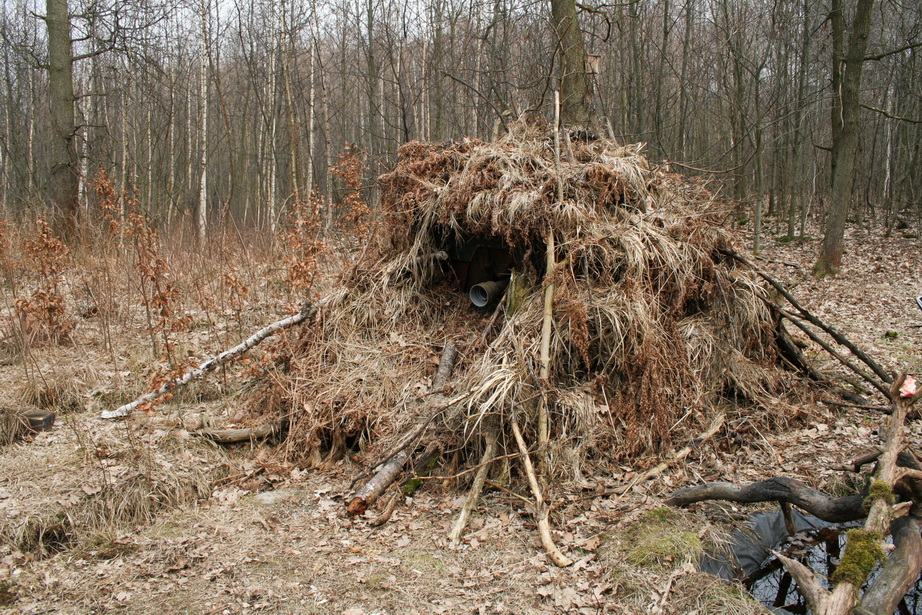
– I set up a hide near the feeding station, from which I could photograph the birds unnoticed.

– I supplemented the hide with natural scenery made of roots and branches, which birds like to use as stopping points before flying to the feeder. In such conditions, the middle spotted woodpecker regularly flew in for bacon and allowed for peaceful observation and photography.

– February is a time of intense ‘percussion concerts’ for woodpeckers. Instead of singing, they drum on hollow trees, which act as a sound box, helping them mark their territory and attract females. Near buildings, birds can also use metal elements such as window sills or lampposts to carry the sound even further. This is not a sign of chaos, but a clever strategy aimed at announcing their presence as loudly as possible.


more stories

This is just the beginning of our journey through ‘The Eyes of the Forest’. More photo descriptions – along with the author’s comments – will appear soon, taking us to other corners of Upper Silesia’s nature and allowing us to discover its extraordinary details.


Brak połączenia z internetem

Nie udało się nawiązać połączenia z siecią. Upewnij się, że masz dostęp do internetu, a następnie odśwież stronę, aby kontynuować korzystanie z serwisu.