Drop of knowledge #23
Welcome to the twenty-third edition of the Ecol Laboratory newsletter
1. Transformer history written in oil
Every transformer has its own “life story” written in its oil. Cellulose decomposition products, such as furan compounds, act as time markers — they signal when paper insulation begins to lose its properties and is approaching a critical point.
By reading these changes, diagnosticians can literally ‘look’ inside the transformer and assess the condition of its most important component without having to dismantle the device. This is what makes furan analysis such a valuable diagnostic tool.
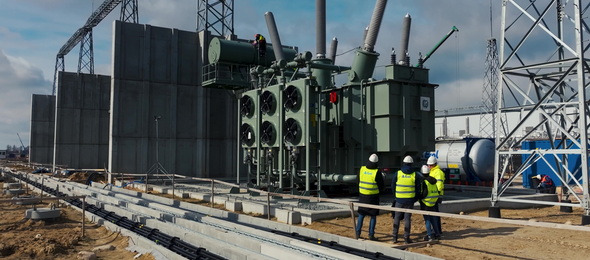
Testing the content of furan compounds in transformer oil – assessment of the condition of paper insulation
The content of furan compounds in transformer oil indicates the occurrence of cellulose decomposition processes.
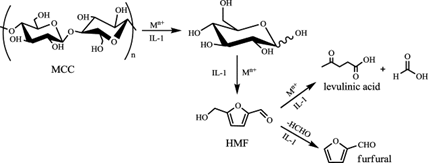
The best researched and described in the literature is 2-furfural (2-FAL), whose concentration in oil allows the condition of paper insulation to be assessed.
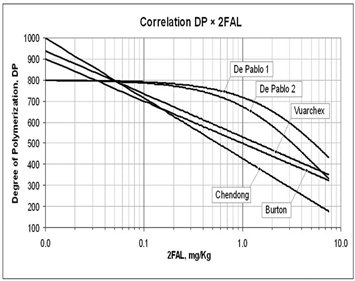
The degree of cellulose polymerisation (DP) in new paper is 1000-1200. Over time and as ageing processes occur, the degree of polymerisation decreases. A DP value of approximately 200 is considered critical, indicating a loss of mechanical strength and disintegration of the paper.
The others are:
- 5-hydroxy-methyl-2-furfural (5-HMF) – indicative of oxidation processes
- 2-furfuryl alcohol (2-FOL) – indicating high moisture content
- 5-methyl-2-furfural – indicating local high-temperature overheating
- 2-acetylfuran (2-ACF)
The degree of moisture in the transformer insulation system affects the testing of furan compounds in oil. Furan compounds are polar and soluble in water. Moisture, i.e. water contained in the insulation, causes their absorption and, as a result, reduces their content in the tested oil. This phenomenon may lead to falsification of test results and an overestimation of the condition of the insulation.
The factors influencing the degradation process of cellulose fibres are:
- Water – moisture in insulation causing cellulose hydrolysis
- Temperature (a temperature increase of every 6-8°C doubles the rate of degradation)
- Oxygen (air access)
- Acidic oil oxidation products (acid number) acting as catalysts and accelerating the hydrolysis process
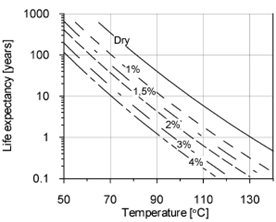
The durability of cellulose insulation determines the service life of a transformer, as shown in the graph below:
2. Ecol becomes a member of the Polish Chamber of Railways
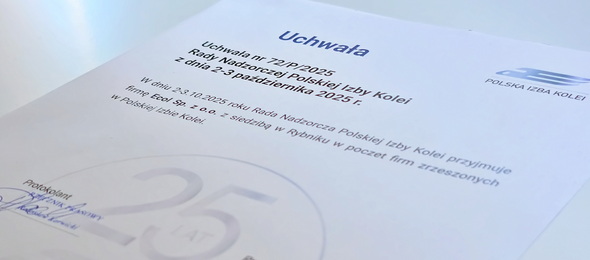
The company Ecol Sp. z o.o. has been officially admitted to the Polish Chamber of Railways. The decision was made by the Chamber’s Supervisory Board during its meeting on 2–3 October 2025.
Membership opens up new development opportunities for Ecol in the rail transport sector — from participation in major industry events, through access to specialist analyses and reports, to support in establishing business contacts and participation in legislative consultations. It is also an opportunity to strengthen Ecol’s brand presence in the railway environment, both in Poland and on foreign markets.
The Polish Chamber of Railways brings together over 460 entities related to the railway market and has been supporting the development of rail transport for 25 years by organising conferences, training courses, economic missions and publishing the industry bimonthly magazine Raport Kolejowy (Railway Report). The Chamber’s partners include the PKP Group, the Ministry of Infrastructure and the Railway Institute.
3. see also:
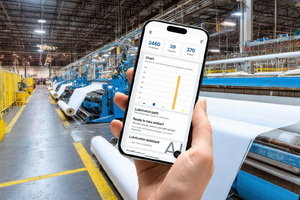
new version of the Smart Ecol application
→ Our intelligent maintenance tool — now in version 3.0, supported by AI.→
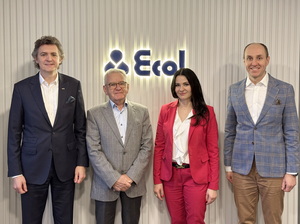
Proserv joins the Ecol Group
→ Proserv Sp. z o.o., a manufacturing and design company based in Gdańsk, has joined the Ecol Group.→
4. Upcoming conferences we are participating in:
- ➡️ 9-11 December 2025, Wind Turbine Blades, Düsseldorf, Germany – The 16th edition of Wind Turbine Blades (9–11 December 2025, Düsseldorf) is a meeting of wind industry experts dedicated to the production, operation and recycling of turbine blades.
5. Gas of the month
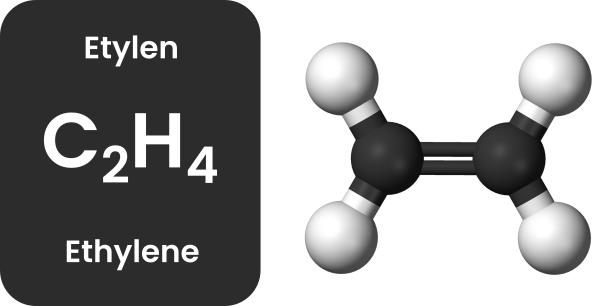
Ethylene (Ethene, ethylene, C2H4) – is a representative of the homologous series of alkenes. In the ethene molecule, there is a double unsaturated bond between two carbon atoms, which makes this compound very reactive. It easily undergoes addition reactions, e.g. with chlorine, bromine, hydrogen chloride, hydrogen bromide or water. Ethene can also polymerise, i.e. combine into long polymer chains, forming a transparent substance – polyethylene.
In DGA (dissolved gas analysis) diagnostics, ethylene is a key indicator, primarily signalling thermal degradation of oil and paper insulation in a transformer. It is formed as a result of the decomposition of hydrocarbons in insulating oil when the transformer is exposed to elevated temperatures, typically in the range of 300–700°C.
The main reasons for the increase in ethylene concentration in oil are:
- overheating of windings, core or other metal components,
- problems with oil circulation or cooling system,
- hot spots inside the transformer.
Monitoring the levels of ethylene and other gases (hydrogen, methane, ethane, carbon monoxide and dioxide, acetylene) allows for early detection of developing faults, enabling preventive measures to be taken and avoiding serious transformer failures.
contact
Do you have any questions about Ecol’s laboratory services?
If you have any questions or requirements, please do not hesitate to contact us.