Deposits and varnish in industrial systems: causes, diagnostics, and prevention methods

deposits in oil systems: mechanisms and consequences

Modern oil systems, due to their miniaturization, broad environmental requirements, and high operating loads, promote the intensive degradation of lubricants. One of the most problematic effects of this process is the formation of insoluble deposits. Submicron particles may form as a result of local overheating, microdieseling, electrostatic discharges, or the depletion of additive packages. Additionally, deposit formation can also result from improper oil blending processes or mixing incompatible oils.

Initially, these contaminants reduce machine and equipment efficiency in a way that is not easily noticeable, and in extreme cases they can lead to costly failures and downtime. dieseling, electrostatic discharges, or the depletion of additive packages. Additionally, deposit formation can also result from improper oil blending processes or mixing incompatible oils. Initially, these contaminants reduce machine and equipment efficiency in a way that is not easily noticeable, and in extreme cases they can lead to costly failures and downtime.

Understanding the mechanism of varnish formation is crucial for effective maintenance operations. Early detection of symptoms allows for preventive and corrective actions to be taken, reducing the risk of equipment damage.
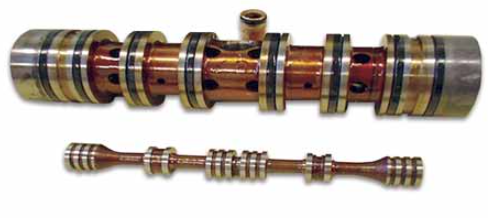
Rys.1 Varnish on valves [1] / source: machinerylubrication.com
Rys. 2 Deposit accumulated on filter elements

phenomena influencing to deposit formation:

Oil oxidation – This is the primary degradation process of a lubricant, observed through an increase in acid number, a change in oil color, increased viscosity, and the presence of degradation products in the FTIR (Fourier Transform Infrared Spectroscopy) spectrum. It occurs when oil components react with a catalyst, forming reactive free radicals whose concentration continues to rise as subsequent reactions take place. This process will continue until the free radicals are neutralized by antioxidants, which convert them into inert by-products. It is important to note the commonly accepted principle, that every 10 °C increase in temperature, significantly accelerates oxidation (especially in the presence of catalysts such as metals, oxygen, or elevated pressure), which approximately halves the service life of the lubricant (Arrhenius rule).

Polymerization – the combination of carboxylic acids and hydroperoxides (ROOH – initiators of radical reactions) into larger particles. This leads to the formation of large, low‑molecular‑mass particles. Each increase in the degree of oil polymerization results in a rise in viscosity.

Thermal and pressure‑induced degradation of the base oil – Oxygenation of the oil combined with adiabatic compression can cause the implosion of air bubbles within the lubricant, known as microdieseling. Consequently, this phenomenon generates localized hotspots in the oil, leading to thermal degradation of the lubricant.

Degradation of the base oil caused by electrostatic discharges – Molecular friction between the oil and components of the lubrication system generates a potential difference. In the reservoirs, this can lead to electrostatic discharges, creating localized hotspots.

process of varnish formation:

Low‑temperature deposits (cold varnish)
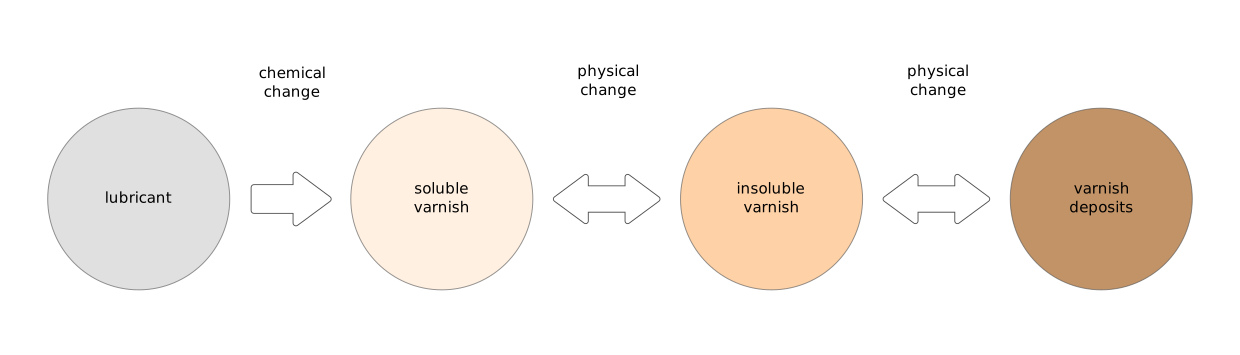
As a result of lubricant oxidation, polar particles are formed, which initiate the varnish‑forming process. When these polar degradation products exceed the saturation point of the solution, they agglomerate on metallic surfaces within the system, creating deposits. Due to the thermal characteristics of this mechanism, varnish typically forms in the cooler zones of the system (e.g., coolers, valves, filters).

Figure 3. Scheme of the deposits formation process

The process of deposit formation is reversible, which means that by altering the temperature, it is possible to influence the position of the saturation point. Monitoring the number of insoluble deposits can provide information about the level of contamination accumulated on system surfaces. Observing the varnish content can help determine the degree of oil saturation with sub-micron deposits, estimating the risk of contamination of component surfaces located at the deeper parts of the system, due to a sudden drop in temperature.

high‑temperature deposits (hot varnish)
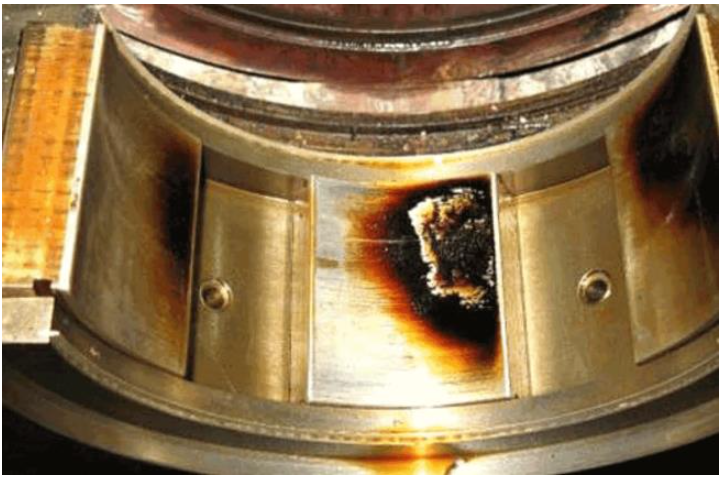
Oil degradation occurs locally, in areas where the highest shear stresses impact on the lubricant. The generated thermal energy causes a local temperature spike, leading to the formation of deposits. This phenomenon most commonly occurs in high‑speed machinery, where heavy loads reduce the thickness of the lubricant film. It may also appear after repairs or system reconfigurations.

Figure 4. Deposits on the bearing surface [2] / source: testoil.com

measurement parameters that may indicate the risk of deposit formation in the system:

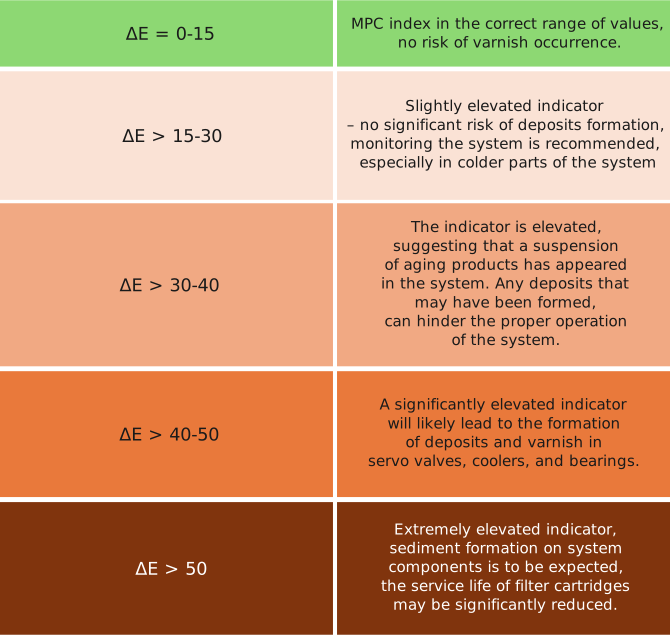
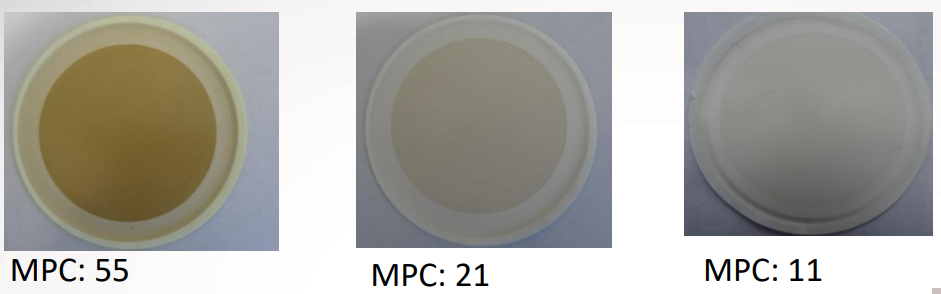
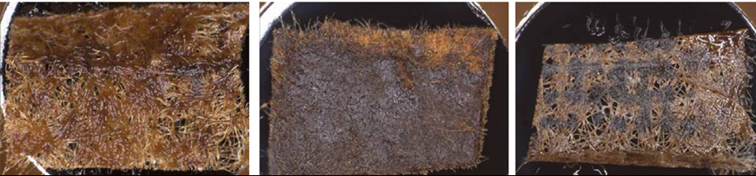
MPC (Membrane Patch Colorimetry) – a test used to determine the tendency of an oil to form insoluble deposits by using a non‑polar solvent and a spectrophotometer. The analysis involves heating up the sample at 60 °C (for 24 hours) and then keeping it for 72 hours at 20 °C. Afterwards, the oil is passed through a membrane filter (0.45 μm). The filter is then analysed using a colorimeter. The result (ΔE) includes the following components:

  • Luminance – L – the highest the proportion of dark particles, the lower the L value.
  • Red value – a  – higher values indicate a greater presence of corrosive particles.
  • Yellow value – b – higher values indicate a greater tendency to form sticky deposits.
Table 1. Interpretation of the MPC result (ΔE)
Figure 5. Examples of MPC membranes

RULER (voltammmetry) – A linear increase in voltage decomposes specific antioxidants (amine- or phenol‑based) at a defined current, generating a characteristic peak on the graph. By comparing the resulting curve with a reference, it is possible to determine the remaining amount of antioxidant additives. Critically low antioxidant content increases the tendency of the lubricant to oxidize, which in turn leads to deposit formation on system surfaces.

Acid Number – Oxidation products formed in the oil exhibit an acidic character, which allows the degree of lubricant aging and its remaining service life to be assessed. The acid number is measured by titrating the amount of potassium hydroxide (KOH) required to neutralize all acidic degradation products present in 1 gram of the sample.

Oxidation Stability (Rotating Pressure Vessel Oxidation Test – RPVOT) – The test subjects the lubricant to high temperature (150 °C), the presence of water, pressurized oxygen, and copper acting as a catalyst. Oxidation stability is determined by measuring the time required for the pressure to drop (1.75 bar) relative to the highest pressure recorded during the test. Reduced oxidation stability promotes chemical transformations of the oil, thereby increasing deposit formation on system components.

Contamination particles count according to ISO 4406 – High levels of contamination in the oil often lead to the formation of agglomerates in the form of deposits. Their polarity may react with water, air, and other compounds to form hard‑to‑dissolve sludge and varnish.

effects of Varnish Formation

  • Reducing heat transfer between system components, increasing system temperature
  • Agglomeration of contaminants, clogging filters
  • Accelerated oil degradation
  • Reducing the clearances and fits required by the manufacturer
  • Leading to improper valve control and jamming of control systems

how to Reduce the Tendency for Deposit Formation (Lower the MPC Value)

  • Use high-quality lubricants
  • Regularly replenish or refresh the oil
  • Use additives that help dissolve deposits
  • Nanofiltration – A filtration method in which oil is forced under pressure through membranes with very small, defined pore sizes that retain larger particles and contaminants.
  • Agglomeration filters – Effective at capturing submicron contaminants. The medium is separated into two streams that impart opposite charges to deposit particles. When mixed again, the particles agglomerate into larger contaminants, allowing conventional mechanical filtration to continue.
  • Electrostatic filters – Capture both soluble and insoluble deposits by utilizing the polar attraction between the filter and varnish particles.
  • Ion-exchange filters – Remove deposits through ionic bonding between polar contamination particles and resin materials of the filter elements, which have a highly structured, absorbent surface.

when Contamination Is Advanced

In cases where insufficient monitoring of the oil’s physicochemical parameters has led to severe contamination and oil replacement is required, mechanical methods should be applied:

  • Hydrodynamic cleaning (hydroblasting) – A method of cleaning the internals of the system without the use of cleaning agents. It uses water at very high pressure (up to 3,000 bar) to effectively remove deposits, sludge and corrosion products while minimizing the risk of damage to cleaned components.

summary

The formation of varnish and deposits is a natural effect of oil degradation resulting from oxidation processes, thermal loads and operating conditions. These contaminants can significantly reduce machine efficiency, accelerate lubricant ageing and lead to failure. Regular monitoring of the oil’s physicochemical parameters and the use of appropriate filtration and purification methods can reduce the risk of their formation and keep the system in a safe operating condition.


Key Takeaways

  • → Varnish and deposits are formed mainly as a result of oil oxidation and local overheating.
  • → In most cases, the deposit formation process is reversible and depends, among other factors, on temperature and the level of oil saturation with degradation products.
  • → Key risk indicators include MPC, antioxidant level (RULER), acid number and oxidation stability.
  • → Even small amounts of deposits can cause problems with cooling, filtration and the operation of control components.
  • → Prevention (oil condition monitoring, proper filtration and system cleanliness) is significantly more cost-effective than removing the effects of contamination.

bibliography

  1. 1. Michael Barrett, Insight Services; „Varnish Potential Analysis”.
  2. 2. Hasanur J. Molla et al., Saudi Aramco; „Resolving Varnish Challenges Using Soluble Varnish Removal Technology”.
  3. 3. Dave Wooton, Wooton Consulting; Greg Livingstone, Fluitec International; „Complete Guide to Lubricant Deposit Characterization”.
  4. 4. Noria Corporation; „The Lowdown on Oil Breakdown”.
  5. 5. Jim Fitch, Noria Corporation; „The Power of the Patch: Comparing Particle Analysis Methods Using Membranes”.
  6. 6. Jim Fitch, Noria Corporation; „Sludge and Varnish in Turbine Systems”.
  7. 7. Wasan Chokelarb, Pornsawan Assawasaengrat, Andy Sitton, Thanant Sirisithichote, Pongsert Sriprom; „Soluble and Insoluble Varnish Test Methods for Trending Varnish Buildup in Mineral Turbine Oil”.
  8. 8. Ghasem Shilati, Naham Pala Engineering; „Deficiencies of Membrane Patch Colorimetry (MPC) Test: The Varnish Potential Test”.
  9. 9. Bennett Fitch, Noria Corporation; „Identifying the Stages of Oil Oxidation”.
  10. 10. Greg Livingstone; „Varnish Deposits in Bearings: Causes, Consequences, and Cures”.
  11. 11. Justin Stover, C.C. Jensen; „Adsorption: A Simple and Cost-Effective Solution to Remove Varnish”.
  12. 12. Greg Livingstone; „Varnish Deposits in Bearings: Causes, Consequences, and Cures”.
  13. 13. Nguyen Truong, Noria Corporation; „Today’s Varnish Control Technologies”.
  14. 14. Sung-Ho Hong, Eun Kyung Jang; „Varnish Formation and Removal in Lubrication Systems: A Review”.

Brak połączenia z internetem

Nie udało się nawiązać połączenia z siecią. Upewnij się, że masz dostęp do internetu, a następnie odśwież stronę, aby kontynuować korzystanie z serwisu.