At the same time, it should be noted that the purchase procedure under excise duty exemption requires the buyer to meet specific formal requirements and to properly organise documentation. In this article, we explain who can purchase oils without excise duty, which products are covered by the exemption, and how the entire process works in practice.
Purchase of oils and lubricants without excise duty – what is worth knowing?
With high consumption of lubricants, the ability to purchase products without excise duty results in real and significant savings for the company.
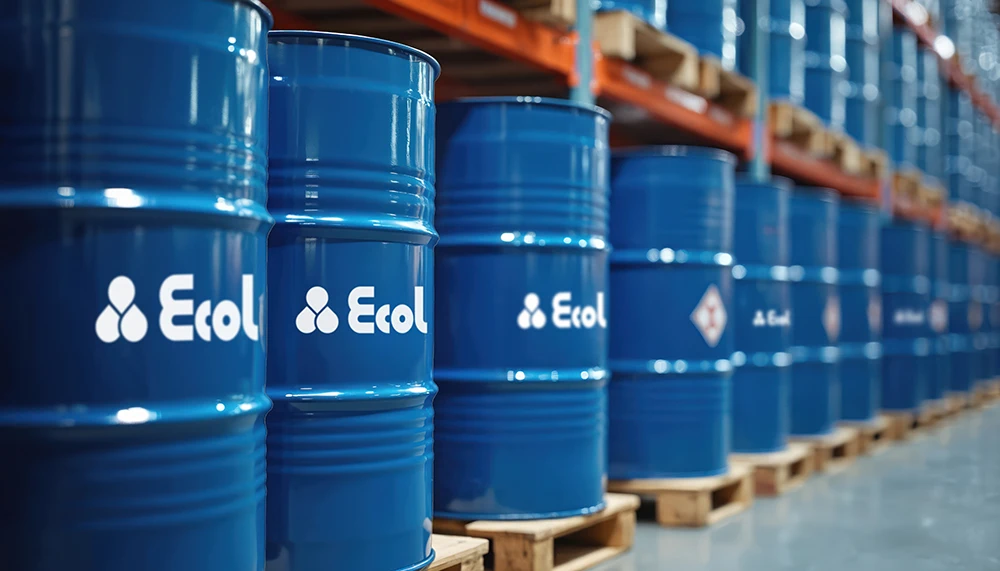
purchase without excise duty
real and significant savings for the company
The purchase of lubricating oils under the excise duty exemption procedure is a solution used by the vast majority of industrial plants in Poland.
With high consumption of lubricants, the ability to purchase products without excise duty results in real and significant savings for the company, as the excise duty rate for lubricating oils amounts to as much as PLN 1.18 per litre, which, in the case of large volumes, generates substantial costs.
what does excise duty exemption mean?
Part of lubricating oils and energy products, similarly to alcohol, motor fuels, fossil fuels, and tobacco products, is subject to excise duty. However, regulations provide for the possibility of exemption from this tax if the products are used exclusively for industrial and technological purposes – and not as fuel, fuel additives, or for engine lubrication.
The basis is, among others, the provisions of the Excise Duty Act and § 6 point 2 of the Regulation of the Minister of Finance of 28 December 2018 on excise duty exemptions.
In practice, this means that authorised entities may purchase selected lubricating oils without excise duty, provided that the requirements set out in the regulations are met, under the excise duty exemption scheme due to two cases:
- 1. intended for own consumption
- 2. consumption in the process of service delivery by an entity authorised to provide a service, which may include, for example, lubrication or filling services, which for Ecol represents a significant competitive advantage and is implemented in many of our customer projects.
What products may be covered by the exemption?
The procedure most often covers a full range of industrial oils, such as:
- hydraulic oils
- machine oils
- gear oils
- circulating oils
- turbine oils
- compressor oils
- lubricating preparations used for technological purposes
A separate category of lubricants subject to excise duty includes plastic (grease) lubricants. The legislator provides for their taxation; however, the applicable rate is currently 0 PLN.
The key criterion for the possibility of purchasing lubricants without excise duty is the product classification according to the CN code (Combined Nomenclature) and its use within the facility. The CN code determines whether a given product is subject to excise duty and at what rate.
Which lubricants cannot be covered by the exemption?
The legislator and the Combined Nomenclature indicate the following categories of products that are not eligible for the excise duty exemption:
- engine lubricating oils (with certain exceptions for marine engines)
- fuels
- fuel additives
- products intended for heating purposes
who can purchase oils without excise duty?
The possibility of purchasing lubricating oils under the excise duty exemption scheme is primarily available to:
- manufacturing plants,
- industrial companies,
- maintenance departments and maintenance service providers,
- paper mills,
- steelworks,
- power plants,
- cement plants,
- facilities using oils exclusively for technological purposes,
- companies holding appropriate authorisations, such as a tax warehouse – like Ecol Sp. z o.o. – or entities with the status of an intermediary operator.
These authorisation issues are described in more detail in the following part of the article.
how does the purchasing procedure work?
1. Registration of the entity
An entity planning to purchase oils under the excise duty exemption must register in the Central Register of Excise Entities (CRPA) via the PUESC portal as an entity using excise goods. This requires specifying the relevant CN codes, trading rules, and intended use of the products. This is a basic requirement enabling the purchase of goods without excise duty being charged.
2. Record-keeping
The company is obliged to maintain records of excise goods. The documentation should allow identification of:
- product type,
- quantity of purchased goods,
- place of use,
- method of consumption.
The accuracy of these records is of significant importance during potential audits or inspections.
3. Purchase from an authorised supplier
Trade in excise goods under the exemption scheme may only be conducted by entities holding the appropriate authorisations. Among the available solutions, the most optimal from an organisational and legal perspective is operating a tax warehouse.
In our case, we operate on the basis of a decision issued by the Head of the Customs Office in Rybnik and have held a tax warehouse at our oil distribution facility since 2019.
Under the granted authorisation, Ecol conducts activities in the scope of:
- storage of excise goods,
- handling and transshipment,
- production,
- dispatch and receipt of goods,
- trade in excise goods.
This enables the sale of lubricating oils to authorised entities without charging excise duty.
What benefits does purchasing oils without excise duty provide?
For industrial enterprises, this primarily means:
- lower operating costs,
- reduced maintenance costs,
- optimisation of lubricant procurement,
- the ability to reduce costs in cases of high consumption volumes.
In the case of large industrial plants, savings may reach tens of thousands of zlotys annually.
what should you keep in mind?
The excise duty exemption procedure requires proper formal preparation and compliance with applicable regulations. The key aspects include:
- correct registration of the entity,
- proper classification of products,
- lawful intended use of oils,
- maintaining the required records,
- cooperation with an authorised supplier.
In practice, proper implementation of the procedure allows companies to safely benefit from the possibility of purchasing oils and lubricants without excise duty, while maintaining full compliance with applicable regulations.
summary
The purchase of oils and lubricants under the excise duty exemption procedure allows industrial enterprises to significantly reduce costs related to operation and maintenance. However, the ability to purchase selected lubricants without excise duty requires meeting specific formal conditions, including registration in the Central Register of Excise Entities, maintaining proper records, and cooperation with an authorised supplier.
Proper product classification according to CN codes and the compliant use of oils are of key importance. In practice, correctly implemented procedures allow companies to safely benefit from tax advantages and optimise lubricant procurement costs.
contact
Do you have any questions about purchasing oils and lubricants exempt from excise duty?
please contact us directly:


FAQ
frequently asked questions
-
No. The possibility of purchasing oil exempt from excise duty depends primarily on the product’s CN code and its intended use. The exemption applies to selected oils used for industrial and technological purposes.
-
These are most commonly hydraulic oils, gear oils, circulation oils, turbine oils, machine oils and compressor oils used in industrial processes.
-
Yes. Registration with the Central Register of Excise Entities (CRPA) is a prerequisite for purchasing lubricating oils without being charged excise duty.
-
Yes. An entity benefiting from the exemption is required to keep records that enable the identification of the type of product, the quantity of goods and the manner in which they are used.
-
The key benefits include reduced operating costs, lower maintenance costs and optimised procurement of lubricants within the company.
-
An excise warehouse is a facility authorised to trade in excise goods in accordance with excise legislation.
-
The decisive factors include:
- the product CN code,
- the intended use of the lubricant,
- the status of the purchasing entity,
- the manner in which the product is used,
- the correctness of the maintained documentation.
check also
-

Lubricants distribution
We supply oils, lubricants and auxiliary materials dedicated to oil management. We cooperate…
-

Distribution of STRUB oils and lubricants
Distribution of oils and lubricants for the food industry, manufactured by the Swiss…
-

Lubrication consulting
Lubrication consulting services for machinery and equipment.