
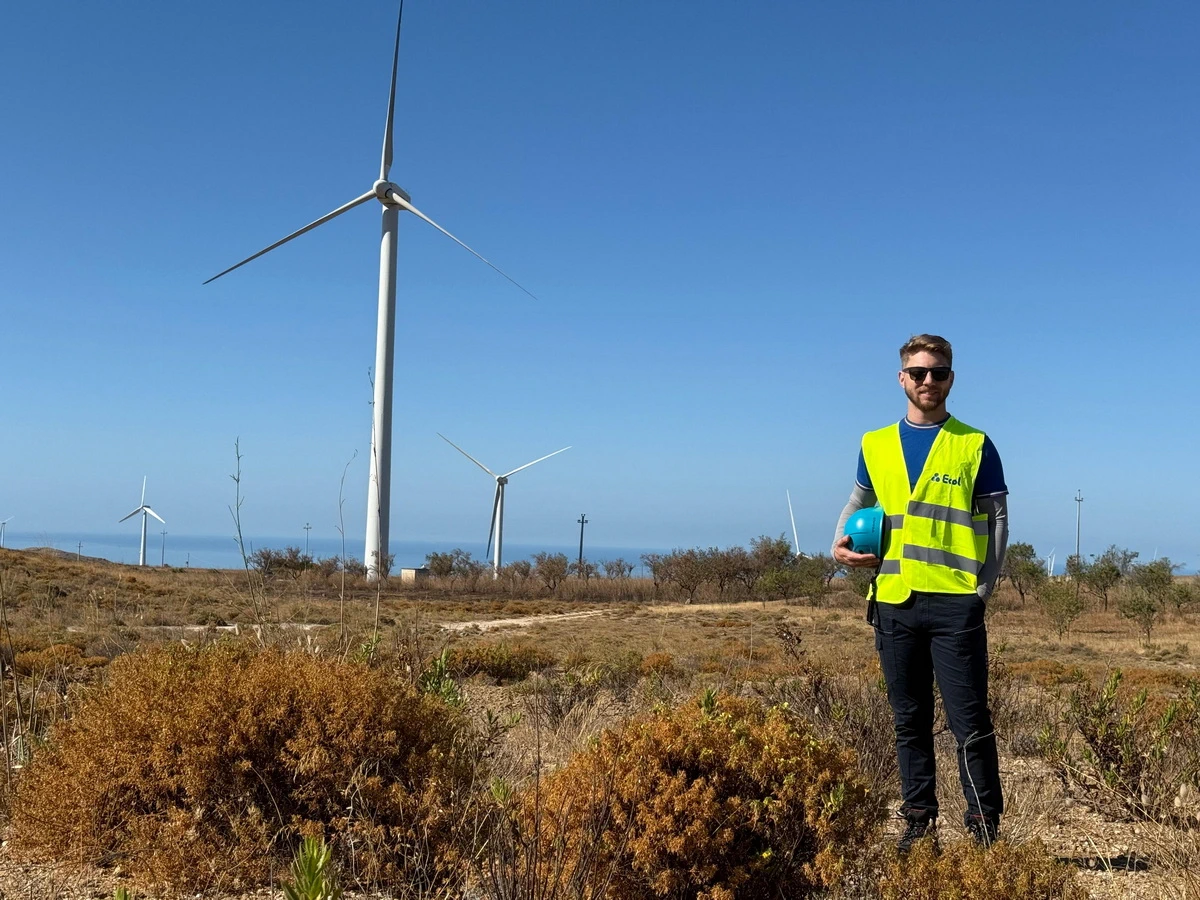

Ecol4wind insights: Why ISO 27001 is no longer just ‘nice to have’

Dr Jakub Sobieraj, Eng.: – Information security in the energy sector is a matter of responsibility, not just certification.

ISO 27001 in the energy sector

ISO 27001 in the energy sector is now less of a ‘nice to have’ and more of a ‘must’. And this is no longer just a theory. It is an observation based on practice. The energy sector is now one of the main targets of cyber attacks, and everything indicates that this problem will only get worse. In the era of process digitalisation and increasing dependence on the online world, it is cybersecurity incidents that seem to top the infamous horror list.


What is ISO 27001 in practice?

ISO 27001 is an international standard defining requirements for an information security management system (ISMS). This standard provides a framework for managing information risk and cyber threats at the strategic and operational levels, and certification confirms an organisation’s compliance with the requirements set by the standard.

Energy as a critical infrastructure sector

Certification is particularly relevant in the energy sector, which is considered to be of key importance for critical infrastructure (CI) both under Polish law and EU directives (e.g. NIS2, EPCIP). Electricity is a fundamental resource – it determines the stable operation of the power system and, consequently, ensures the functioning of the state. Any problems with the system or any of its components may pose a threat not only at the operational level, but also at the strategic level.

We do not live in a vacuum. An effective ISMS can reduce human error, data leaks, and failures caused by poor process oversight. Maintaining ISO 27001 compliance helps organisations meet growing cybersecurity requirements and better manage operational risk, which is becoming crucial in the energy sector.

experiences that confirm the scale of the threats

Recent months have also brought concrete examples of organised sabotage activities in Poland aimed at disrupting electricity and heat supplies, which only confirms the importance of cybersecurity systems and mature risk management in this area. We work every day in the energy sector, where information security is not an add-on to the business – it is its foundation. And that is how we treat it.

Infrastructure that must be protected

In operational practice, there is no doubt that wind farms – both offshore and onshore – are a critical part of the energy system. The sudden loss of several dozen, and in the case of offshore installations even several hundred megawatts of power, can lead to serious disruptions in the system: from balancing problems to, in extreme scenarios, the risk of a blackout.
That is why we treat wind farms with the same seriousness as coal-fired, gas-fired (including combined cycle) and nuclear power plants, with which we also work. Operational safety, system resilience and continuity of operation remain key.


Dr Jakub Sobieraj, Eng.

Graduate of the Silesian University of Technology in Gliwice, Faculty of Environmental Engineering and Energy, PhD in environmental engineering, mining and energy. Since the beginning of his professional career, he has been involved in the energy sector – from research and development and scientific activity, through design and strength and heat flow calculations, to management and business development.

Author of numerous scientific publications and commercial projects implemented for the energy sector. Former lecturer at the Silesian University of Technology and the Krakow University of Technology.

At Ecol Sp. z o.o., he serves as Director of Business Development for services dedicated to the wind industry as part of the Ecol4Wind programme. He is responsible for developing the offer, cooperating with clients and setting strategic directions for the development of solutions for wind energy.

contact

do you have questions about Ecol’s services for the wind industry?

contact us directly:

Brak połączenia z internetem

Nie udało się nawiązać połączenia z siecią. Upewnij się, że masz dostęp do internetu, a następnie odśwież stronę, aby kontynuować korzystanie z serwisu.